Showing posts with label japanese. Show all posts

Sunday, March 20, 2011

Japan crisis: two schoolboys with futures in ruins

Japan crisis: two schoolboys with futures in ruins

Three days after pupils at an elementary school in Japan's Iwate province posed for an end-of-term photo, their childhood world was lost for ever thanks to the tsunami that engulfed their town

A world in rubble: Taiga Toba (left) and his friend Manabu Tsurushiba look over the ruins of their school. Their mothers are both missing, presumed dead. 'We realised it wasn't the usual earthquake,' says Taiga. 'I thought, am I going to die here?'
Image 1 of 3
A world in rubble: Taiga Toba (left) and his friend Manabu Tsurushiba look over the ruins of their school. Their mothers are both missing, presumed dead. 'We realised it wasn't the usual earthquake,' says Taiga. 'I thought, am I going to die here?' Photo: KEITH BEDFORD

The photograph was taken only last week, but it is already a scene from a vanished world. Just before graduating, Takata Elementary School’s top class of 12-year-olds play up to the camera, the holidays and their lives ahead of them, their eyes full of excitement and hope. Three days later, the sea changed everything.

Friday was meant to have been Taiga Toba’s graduation party. His mother would probably have bought him a present. Instead, if they can find her body, he will soon be attending her funeral. Staring into the photo, he picks out five other children who lost parents. The teacher is missing. The boy next to him, his hand in the air, waving to the camera, is dead. And these are just the people he knows about.

We found him searching the rubble near the wreck of his home, a thin, serious little boy with glasses who wants to be a basketball player. He was with his best friend, Manabu Tsurushiba, yet another child who has lost his mother. In a yellow plastic shopping basket, Taiga carried everything he’d found of his old life: one left basketball boot and a dirty LA Lakers cap. His other possessions are the clothes on his back, and a second set he kept at school. He is homeless now, living with 25 other relatives in a house outside the town.

We were in Rikuzentakata, the worst-hit city in the province of Iwate. Eighteen hundred people died here, and three quarters of the town no longer exists. Where it did not destroy the buildings, the water came through them, bringing whatever it carried. The shopping centre has cars and boats on the third floor. But mostly it was destroyed. The landscape is a flat-plan of shattered wood and rubble.

Taiga’s class was making music boxes when the earthquake happened. The teacher was just giving out the mechanisms. They’re still there in the classroom, in their little polystyrene trays, with the boxes and all the kids’ belongings, left behind in the rush.

“We got under the desks but the floor was rocking,” says Taiga. “We realised it wasn’t the usual earthquake. I thought: ‘Am I going to die here?'” The playground is now six feet deep in debris. But nobody did die at the school building. Even the goldfish, in their tank in the lobby, are still in one piece. By sad irony, it was the kids whose parents rushed to save them who were at the greatest risk.

“My mother came for me and took me home,” says Manabu, looking down at the floor, driving his fist into his palm. “She went inside the house to pick up blankets, and then the tsunami came.”

Manabu was still outside, but found he couldn’t say a word. “I just couldn’t call out,” he says. “I just didn’t realise how fast it was. I just ran up the hill. I could hear the noise of the houses being destroyed behind me and I just kept running.”

Taiga was still at school. “One of the teachers was looking out,” he says. “Then he suddenly shouted ‘Run!’ It was like Godzilla. You could see the wave coming towards you, knocking down houses. It was quite slow, but very powerful.

“I didn’t try to get home. I couldn’t see where my house was any more.”

Taiga’s classmate Tomoki Ogata, also 12, was collected from the playground and taken by his mother into the path of the tsunami. Now both mother and child are in another local school, the one that has been turned into the temporary mortuary.

“He was a very gentle boy. He never had fights. He was very kind, very studious. He loved to read,” says Yuko Marakami, his class teacher, who has come into the school staffroom while we are with Taiga and Manabu. Then, suddenly, she notices something on her desk, picks it up and begins to weep.

“It’s a farewell card from the children,” she sobs. “I’d no idea they’d done this. They were going to give it to me on graduation day but we never had it because of the events. They must have come back and slipped it on to my desk. I saw them cutting it out last week, but they said it was decorations for the last-day party.”

There are two folded A3 cards – a pink one from the girls, and a blue one from the boys. Both have the class slogan, “One for all and all for one”, in English on the front, and each child has written his or her own message on a yellow circular Post-it note. Tomoki Ogata’s message to Mrs Marakami says: “You made some scary faces, you made some kind faces, some funny faces. I enjoyed them all and I won’t forget you when I go to junior school.”

Taiga spent three days looking for his mother before accepting that she was dead. He went round all the reception centres, checking the names on the lists. Whenever a case is “resolved”, a red line is drawn through the name. Mrs Toba has not been given her red line. She is still officially missing, but nobody has much doubt about her fate.

The strange thing, though, was how upbeat and cheerful the two boys mostly were. They were excited to meet foreigners and wanted to show us their town. Whenever they saw us, they’d run into their usual place, sitting on each other’s laps in the front seat of our car. For the moment, at least, the novelty of exploring their new bombed-out world – paradise for a 12-year-old – seemed to blot out the tragedy that had overtaken them.

We ask Taiga what her mother was like. “She was fashionable,” he says. “She loved ornaments. She loved shopping. She used to call me Taiga-chi.” Then he stopped, and we changed the subject.

Taiga’s father, Futoshi, is Rikuzentakata’s mayor. Clinging to the roof of City Hall, Mr Toba watched his own house across the valley being ripped up by the tide, knowing his wife was inside it. But his responsibility was to his town. Not until 24 hours later could he make time to confirm that she was missing, or to check on Taiga and his younger brother. He was one of the last people in Rikuzentakata to learn the fate of his loved ones.

“I couldn’t go straight to my family. I had to stay at the office,” he says. He still hasn’t set eyes on his kids for more than two minutes at a time. “I’m a human being and a father, and I do have a hard time at the moment,” he says. “But a lot of my staff have lost their families, too. Everyone is holding it back.”

Taiga, too, the politician’s son, is maintaining a public face. “I have to stay strong, I have to stay positive,” he says. But Manabu is quieter. When we wander near his old house, he slows down, covering his eyes, and Taiga tells us he hasn’t been back there yet. We hadn’t realised, and turn in a different direction.

The class photo was taken as a milestone in these children’s school careers. Now it is a memorial, for lives and a world swept away.

Taiga reels off the names of other classmates who have suffered terrible loss; others he just doesn’t know about. He points to Ayumi Murakami, whose father, he says, is missing; and to Takuma Wakasugi, whose father is also feared dead. Natsuki Kanno’s mother is fighting for her life in hospital while Yusuke Nakano and Rui Nagano lost both their parents.

The teacher in the photo is 27-year-old Monty Dickson, an American from Alaska, who had been teaching English in Rikuzentakata for two years. For at least two nights last week, US Embassy staff visited the temporary city hall headquarters in the search for the young man. Just as scores of Japanese turn up there to scour the list of those missing and those found dead, so too did the embassy staff. Monty, a popular member of staff, has not been found.

Like thousands of children across north-east Japan, Taiga is trying to cope with the terrible loss. His mother is dead; his father is busy; but at least he has Manabu to help him get through the days. “We feel we are closer now and we have connected on a much deeper level,” he says.

Saturday, March 19, 2011

Why is there no looting in Japan after the earthquake

Why is there no looting in Japan after the earthquake?

People queuing outside a shop in Japan

During a state of emergency it is not unusual to hear about looting, so why have there been very few reports of this in Japan? Commentators from across the media have their say.

It's not possible to list them all but reports of looting during disasters are commonplace, like current reports from GNN Liberia on Liberian mercenaries being accused of looting in Ivory Coast.

In the UK there have also been incidents, like Exeter's Express and Echo's report of people scavenging motorbikes on the Devon coast back in 2007, when the contents of a container ship were washed ashore. In the same year, police investigated reports of looting at flood-hit properties in West Yorkshire.

The absence of stories of this kind has been noted by writers around the world. Slate's Christopher Beam says there's more to the lack of looting than honesty. He says that Japanese people are more honest than most, but adds the Japanese legal structure rewards honesty more than most.

His other theories why there isn't any looting in Japan include the police presence and organised crime. "Police aren't the only ones on patrol since the earthquake hit," he says. "Members of Yakuza, Japan's organised crime syndicate, have been enforcing order."

Start Quote

It sounds grotesque to say we should see reasons for hope as we watch in real time while the earth is shaken six inches on its axis”

Johann HariIndependent columnist

The Voice Of America's Steve Herman has been in Japan. He describes the country as "slowly grinding to a halt", which he puts down to traditional Japanese stoicism.

"There's a touch of bitterness in a few voices and some subtle signs of frustration but no show of open anger," he says.

The nearest Mr Herman gets to suggesting anyone taking advantage of the disaster is when he speculates that a black economy in rationed goods may rise up. To back up his prediction, Mr Herman cites the time this happened in the days after Japan's defeat in World War II.

The idea that the Japanese are acting in some way against the grain in an emergency situation is challenged by columnist Johann Hari in the UK's Independent. He says the panicking disaster victim is a myth. He argues that in reality the vast majority of people behave in the aftermath as altruists, saving their fellow human beings and sharing what they have. He goes on to say the same predictions are made about every disaster.

People taking a motorbike off the beachOpportunists made the most of motorbikes washed up on the Devon coast

"Once the lid of a tightly policed civilization is knocked off for a second, humans will become beasts. But the opposite is the case. It sounds grotesque to say we should see reasons for hope as we watch in real time while the earth is shaken six inches on its axis, tsunamis roar, and nuclear power stations teeter on meltdown. But it is true."

This, for Mr Hari, is proof enough to "kill off right-wing ideologies based on the belief that humans are inherently selfish".

But US blogger Andrew Sullivan's readers have been disputing the story there is not looting in Japan. They've been sending in examples.

According to a commenter on Mr Sullivan's blog the Daily Dish, who has been reading Japanese reports, they don't seem to be translated into English or reported on English language news sites.

But, the commenter translates an article in Japan's 47 News citing 40 known cases of looting in Miyagi.

Friday, October 05, 2007

Funny Adverts


Saturday, June 09, 2007

Only Human - K (one litre of tears)

Only Human

Lyrics: Osanai Mai Music: Matsuo Kiyoshi, Tanaka Choku

Kanashimi no mukou kishi ni
Hohoemi ga aru toiu yo

Kanashimi no mukou kishi ni
Hohoemi ga aru to iu yo
Tadori tsuku sono saki ni wa
Nani ga bokura wo matteru?

Nigeru tame ja naku yume ou tame ni
Tabi ni deta hazusa tooi natsu no ano hi

Ashita sae mieta nara tame iki mo nai kedo
Nagare ni sakarau fune no you ni
Ima wa mae he susume

Kurushimi no tsukita basho ni
Shiawase ga matsu toiu yo
Boku wa mada sagashite iru
Kisetsu hazure no himawari

Kobushi nigirishime asahi wo mateba
Akai tsume ato ni namida kirari ochiru

Kodoku ni mo nareta nara
Tsuki akari tayori ni
Hane naki tsubasa de tobi tatou
Motto mae he susume

Amagumo ga kireta nara
Nureta michi kagayaku
Yami dake ga oshiete kureru
Tsuyoi tsuyoi hikari
Tsuyoku mae he susume

[Go Back]

Only Human

Lyrics: Osanai Mai Translation: Jonathan Wu

On the opposite coast of sadness
is something called a smile

On the opposite coast of sadness
is something called a smile
But before we can go there,
is there something we’re waiting for?

In order to chase our dreams, we can’t have a reason to run away
We’ve got to go, to that far away summer’s day

If we find it tomorrow, we can’t sigh
Because like a boat that opposes the stream
we have to walk straight on

In a place worn down by sadness
something called a miracle, is waiting
Yet we are still searching
for the sunflower that grows at the end of spring

The warrior who awaits the morning light
before he can clasp it with red nails, his tears glitter and fall

Even if we’ve grown used to loneliness
only relying on the light of the moon
We have to fly away with featherless wing
just go foward, just a little further

As the rainclouds break
the wet streets sparkling
Although it brings only darkness
A powerful, powerful light
helps push us to walk on

[Go Back]
Together Forever

Lyrics: Osanai Mai Music: James

Naki dashisou na kimi wo mite itara
Saki ni namida koboshiteta yowai boku sa

Te wo tsunagou Honey itsumo yori tsuyoku
Datte tanoshii toki wa
Kakeashi de furari okizari ni suru kara

Let’s stay together forever futari de ireba
Kitto nagareru kumo tomerareru yo
Let’s stay together forever boku ga iru kara
Zutto kimi wa tada kimi no mama de ii

Only Human

Lyrics: Osanai Mai Translation: Jonathan Wu

On the opposite coast of sadness
is something called a smile

On the opposite coast of sadness
is something called a smile
But before we can go there,
is there something we’re waiting for?

In order to chase our dreams, we can’t have a reason to run away
We’ve got to go, to that far away summer’s day

If we find it tomorrow, we can’t sigh
Because like a boat that opposes the stream
we have to walk straight on

In a place worn down by sadness
something called a miracle, is waiting
Yet we are still searching
for the sunflower that grows at the end of spring

The warrior who awaits the morning light
before he can clasp it with red nails, his tears glitter and fall

Even if we’ve grown used to loneliness
only relying on the light of the moon
We have to fly away with featherless wing
just go foward, just a little further

As the rainclouds break
the wet streets sparkling
Although it brings only darkness
A powerful, powerful light
helps push us to walk on

[Go Back]
Together Forever

Lyrics: Osanai Mai Music: James

Naki dashisou na kimi wo mite itara
Saki ni namida koboshiteta yowai boku sa

Te wo tsunagou Honey itsumo yori tsuyoku
Datte tanoshii toki wa
Kakeashi de furari okizari ni suru kara

Let’s stay together forever futari de ireba
Kitto nagareru kumo tomerareru yo
Let’s stay together forever boku ga iru kara
Zutto kimi wa tada kimi no mama de ii

[Go Back]

Together Forever

Lyrics: Osanai Mai Translation: Jonathan Wu

If I see you again, I’ll probaby cry
I’ll be the first to cry cuz I’m weak without you

Take my hand Honey so we always be strong
Then when we can have fun together
let’s run away and leave everything behind

Let’s stay together forever, you and me baby
we can stop the clouds from flowing back in
Let’s stay together forever, cuz while I’m here
You can always just be, who you want to be

Monday, June 04, 2007

一公升的眼泪, One Litre of Tears , 1リットルの泪


没有什么特别的
只是被特别的病魔缠上而已

病魔为什么会选上我呢?

妈妈 我是为了什么活在这个世上的呢?

一想到未来
我就会再一次流下眼泪

妈妈 我可以结婚吗?

以花喻 蓓蕾般的我的人生
想要不遗悔恨地珍惜这青春的始端
——第一集


在我的内心里
有一个一直相信我的妈妈存在
今后也请你多多关照了
总是惹您担心 对不起了
——第二集


病魔 为什么选择了我?
命运这样的字眼 不能让人接受啊
——第三集


想要坐时间机器回到过去
如果没有得这种病 恋情也能成功吧
想要被人紧紧抱住 想得难以忍耐
——第四集


很不甘心 很丢人 自己一个人痛苦就好了
却迫不得已地把周围的人都牵连进来

不会再说想要回到那一天
我要认同现在的自己而生活下去
——第五集


虽然也会被无心的目光所刺伤
然而也明白了同样有温柔的目光
所以 我绝对不会逃避
这样的话 一定有一天
——第六集


新的一年来临了
并且现在的生活变得比以前更需要他人帮助

就算现在要坐轮椅生活
但朋友却没有任何改变
朋友真好 真想永远在一起

喜欢在体育馆里回响的篮球的声音
放学后回归平静的教室也好
从窗口望出去的风景也好
走廊地板的"咯吱"声也好
在生活指导教室前的谈话也好
全都喜欢

也许尽给别人带来麻烦
也许什么作用都起不了
即使如此 我还是想待在这里
因为这里是 我所存在的地方
——第七集


去年春天 我满心希望自己能考上东高
到底是怎样一个春天在等着现在的我呢

妈妈说要辞掉保健师的工作
想到妈妈会一直在我身边
果然放心许多

我的病是治不好的
好像没有治疗方法
被医生告知有一天将不会走路 站立 说话
这一年里
理所当然能做的事变得一件一件不会做了
在梦中我能和同学一起说话走路
一起打篮球 尽情地奔跑
但一睁开眼睛只有一个不能再自由活动的身体
每天都在改变
为了不摔倒要怎么走路才好呢
要怎么样才能快点吃完便当呢
怎么做才能不介意别人的眼光呢
我不得不在脑中一一考虑这些生活下去
上高中 上大学 去工作
这样描绘出的未来已经不可能实现了
找不到生存下去的道路
看不到微小的希望
因此生病 我的人生被毁掉了
好几次我都这么想
但是 但是
虽然很悲伤 但这是事实
不管怎样哭泣也逃避不掉病魔
就算想要回到过去 时间也不会倒流
所以我想一定要自己喜欢上这样的自己
然而自从身体变这样后才体会到许多事
家人只是陪在我的身边就让我觉得很可贵
装做若无其事帮助我的朋友们的手非常温暖
拥有健康的身体 只是如此就已经很幸福了
虽然生病了 但也并不是只有失去
身体变成这样的我 就算是我
被人说是残疾 背着沉重包袱的我 就是现在的我
我会抬头挺胸地活下去
因此 我自己决定了要去养护学校
虽然和大家生活的地方不一样
今后 我想在自己选择的道路上一步一步地寻找光明
直到我能这样微笑着说话为止
我最少需要一公升的眼泪
所以我不再认为离开这个学校将会有什么终结
大家 一直以来亲切地待我 真的很感谢

摔倒了又有什么呢
再站起来就行了

摔倒的同时仰望天空
蓝蓝的的天空今天也是广阔无边地微笑着
我是活着的

离毕业典礼还有4天
大家好像都在为我折千纸鹤
我把大家拼命为我折纸鹤的身影刻印在我的瞳眸之中
这是为了即使分离 也绝对不要忘记
但是——
〈我好想他们说“亚也 不要走”〉
——第八集


春天来了
明明是会让人们兴奋的季节
然而我现在看起来
却像是被养护学校的水泥墙给挡住了前方
即使如此季节却是一副什么都不知道的表情
在我面前流逝

说实话 现在还没有身为养护学校学生的真实感
但我要努力
因为从今天起 这里就是属于我的地方

《晨曦之光》:
这个学校的大门前立有一堵墙
在这堵墙上能看见逐渐泛白的晨曦之光
是一堵总有一天抬头望去积累了叹息的墙
这堵墙 就是我自身的残疾
即使是声嘶力竭的哭喊也好 也不会消失
但是 在这阳光照射的瞬间不也照射到这堵墙了吗
那样的话 即使是我
好像也能找出来 去找出来吧

停下脚步 活在当下
即使总有一天会失去
把放弃的梦想托付给谁不是也很好吗

人不是活在过去的
做现在力所能及的事就可以了

MA WA PA行和拨音N变得难说起来
发出的不成声音 只是震动空气罢了
所以无法传达给对方
最近 自言自语多了起来
但是能作为说话的练习还是多多做吧
说话这件事没有发生改变
——第九集


如果痛苦时就超越这痛苦
那对岸有彩虹般的幸福等待着
不要焦急
不要贪心
不要放弃
因为大家都是一步一步向前走
不管多么微不足道的事也好
我想要对他人有帮助

18岁
升学也好 就业也好
大家都朝着各自的道路前进
然而我…
这样的话 属于我的天地也就没了吧

大家的心情直沁入我心中
但是妈妈 我并非想要容易生活的地方
今后我该怎样生活下去
我才是我在考虑的
现在的我只是在受大家的照顾

脚步走不稳
无法正常地说话
即使如此 因为是自己的身体 自己绝不能放弃
18岁 就算是我 也应该有属于我的未来

一回想过去就会掉泪 心里难受
现实过于残酷 过于严苛
连梦想都不曾给予
一旦想象将来 又有不同的泪水流出

我究竟该去向何处才好?
虽然我得不到什么答案
但只要能写作 心情就会变得开朗起来
但既传达不了这份求救
也无法遇见那份救赎
仅仅只是回响着
我面向黑暗声嘶力竭的呼喊声
——第十集


给麻生的信
给麻生同学:
因为当面很难开口说,所以给你写信。谢谢你一直陪在我身边。谢谢你常常鼓励我。
每当看着找到自己的梦想、生气勃勃地闪耀着的麻生同学,我也变得高兴起来。会学会很多事,会邂逅许多人,你今后也将一直一直生活下去,你的未来无限宽广。但是,我却不同。我所剩下的未来是,竭尽所能地生存下去,仅此而已。这差距是无论如何都无法弥补的,每一天,都是在和自己战斗,痛苦着,仅仅是为了压抑这份心情,就已经耗费我所有。说实话,和麻生同学在一起,很痛苦,想做那个,也想做这个,要是我健康的话就能做到,总是会这么想。只要和麻生同学在一起,就会情不自禁地描绘起无法实现的巨大的梦想。当然,这不是麻生同学的错。但是,太过羡慕,太过可悲,无论如何,都会觉得现在的自己,过于悲惨,那样的话,就不能面向前方生活下去。谢谢你为我所做的一切,谢谢你,对着这样的我说喜欢。什么都无法回报你,对不起。已经不能再见面了。


一家人把洗完的衣服晾晒出来
天空湛蓝很漂亮
虽然风有些寒冷
但感觉很舒服
感觉到了冬天的气息

我20岁了
自生病以来已经过了5年
拥有的东西逐一失去
剩下的仅有几样而已
已经想不起以前的我了

花瓣一片一片地绽放
花朵也不是一下子全开的
我明白昨天是与今天紧密相连的
好高兴

妈妈 我到底为了什么而生存着
大家的哭泣的表情因为眼泪而变得模糊
我一定会因为这种小事死掉吧

仅仅一句不会丢下你
让我多受鼓舞啊
医生 谢谢你没有丢弃我

把手放在胸口
能感觉到心跳的声音
好高兴啊 我还活着

我要承认现在的自己 生活下去


erika演一公升的眼泪所写的:

少女亚也的生命日记——
十几岁的少女木藤亚也,
正要展开人生中最美好的年华,
却疾患了“脊髓小脑萎缩症”
——一种罕见的绝症。

说话、坐立、进食.....这些最平凡不过的行为,
在亚也身上全成为了遥不可及的幸福。
面对丝毫没有光明的未来,女孩儿将会如何抗争?

“医生,我能结婚吗?”
怀抱着强烈却无法实现的少女幻想,
她独自忍受着痛苦折磨,
在这决不妥协的强大意志力面前,
病魔何时才能退缩?

“我到底是为何生存?”
没有华丽的辞藻,只有温暖的文字,
亚也跳动的心脏诉说着生存的意义。

感动千万人!人生路上,不可不读。

原作的内容相当感人,希望大家有机会一定要看!
我希望借由自己的演出,
让各位能触及到亚也最深层想表达的讯息。

———— 泽尻绘里香

Sunday, April 22, 2007

Teru teru bozu てるてるぼうず

Teru teru bozu (Japanese: てるてるぼうず; "shiny-shiny Buddhist priest"[1])) is a little traditional hand-made doll made of white paper or cloth that Japanese farmers began hanging outside of their window by a string. This amulet is supposed to have magical powers to bring good weather and to stop or prevent a rainy day. "Teru" is a Japanese verb which describes sunshine, and a "bōzu" is a Buddhist monk (compare the word bonze).

Teruteru bozus became popular during the Edo period among urban dwellers[2], whose children would make them the day before the good weather was desired and chant "Fine-weather priest, please let the weather be good tomorrow."[2]

Today, children make teru-teru-bōzu out of tissue paper or cotton and string and hang them from a window to wish for sunny weather, often before a school picnic day. Hanging it upside down - with its head pointing downside - acts like a prayer for rain. They are still a very common sight in Japan.

There is a famous warabe uta, or Japanese nursery rhyme, associated with teru teru bozu:


Teru-teru-bōzu, teru bōzu
Ashita tenki ni shite o-kure
Itsuka no yume no sora no yo ni
Haretara kin no suzu ageyo
Teru-teru-bōzu, teru bōzu
Ashita tenki ni shite o-kure
Watashi no negai wo kiita nara
Amai o-sake wo tanto nomasho
Teru-teru-bōzu, teru bōzu
Ashita tenki ni shite o-kure
Sore de mo kumotte naitetara
Sonata no kubi wo chon to kiru zo

Teru-teru-bozu, teru bozu
Do make tomorrow a sunny day
Like the sky in a dream sometime
If it's sunny I'll give you a golden bell
Teru-teru-bozu, teru bozu
Do make tomorrow a sunny day
If you make my wish come true
We'll drink lots of sweet booze
Teru-teru-bozu, teru bozu
Do make tomorrow a sunny day
but if it's cloudy and I find you crying
Then I shall chop your head off

Like many nursery rhymes, this song is supposed to have a darker history than it first appears. It allegedly originated from a story of a monk who promised farmers to stop rain and bring clear weather during a prolonged period of rain which was ruining crops. When the monk failed to bring sunshine, he was executed.

Teru teru bozu in fiction

  • In the ending theme of the anime Jungle wa Itsumo Hare Nochi Guu Final the main character sings a teru teru bozu rhyme.
  • The design of the kaiju Nova from the television series Ultraman Leo (and later revived in Ultraman Mebius) is based on the teru teru bozu.
  • In the manga 20th Century Boys, a couple of kids going through a "test of courage" encounter a giant teru teru bozu on a stairwell.
  • In the movie Ima Ai Ni Yukimasu, the teru teru bozu was used by Yuji to prolong the rainy season in hope of spending more time with his mother.

Sunday, April 08, 2007

Hard Gay - Ima Ai Ni Yukimasu

Hard Gay - The Television Part 1 of 2


Hard Gay - The Television Part 2 of 2

Friday, March 16, 2007

Mimura goodies


Monday, March 05, 2007

1 Litre of Tears


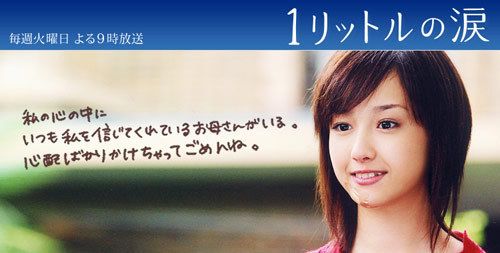
1 Litre of Tears (1リットルの涙 Ichi Rittoru no Namida) is a Japanese television drama for Fuji Television about a girl who was diagnosed with a disease called Spinocerebellar Degeneration when she was 15 years old, and was able to continue her life until her death at the age of 25 years old. Erika Sawajiri played this girl in this drama.

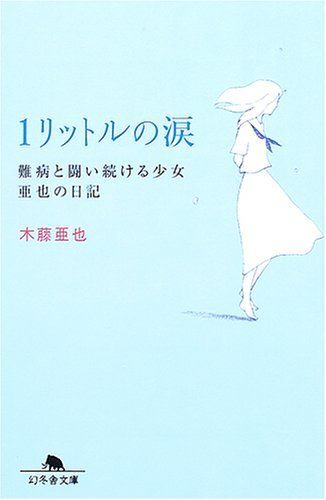
The plot is based on the true story of a Japanese girl named Aya Kito (木藤亜也, July 19, 1962 - May 23, 1988), who had the same disease. She kept writing in her diary to remember her experiences until she could no longer hold a pen. Aya simply wished to live until the end of her life, and the purpose of writing in the diary was to remind herself to not give up. She shed tears many times, at the same time encompassed by the rich love and support from her family and friends. Her diary 1 Litre of Tears was published shortly before her death. It encouraged many people, healthy or diseased, because of its inspiring and courageous messages. As Aya wrote, "Just being alive is such a lovely and wonderful thing."


other links:
wikipedia Ichi Rittoru no Namida

Midnight Sun


The story is centered around Kaoru, who is out almost every night playing and singing in front of the train station. At day she sleeps, but every morning she sits by the window of her room to watch a young surfer, Koji Fujishiro (藤代 孝治), played by Takashi Tsukamoto, who usually waits by a bus stop for his friends before they go surfing each morning. She develops a crush on the boy, even though she doesn't even know him.

Until one night, when she is playing as usual by the train station she sees Koji pass by. She leaves her guitar and runs after him, running into him and knocking him over when she finally catches up to him by a tram crossing. She then proceeds to clumsily introduce herself in a way that leaves Koji utterly confused and her friend embarrassed. When her friend drags her home, they sit by Kaoru's window while they watch Koji meet up with his friends by the bus stop. Kaoru explains everything, and her friend notes that she probably goes to the same school as him, and offers to spy on him with a camcorder and find out about him for her.

The next night she sits by the bus stop before going home after singing, and she plays a song there and sings with her eyes closed, and afterwards opens them to find Kouji having arrived on his scooter. Both embarrassed, they start talking and Koji eventually promises to meet her and listen to her sing another night, at the start of the school holidays. When they meet up, another, obnoxious street performer has taken her spot in front of the train station. Koji decides to take her to the city, where after running around seeing the sights, she starts playing in a street square. A huge crowd gathers to hear her play and sing. After they sit on stairs and watch the ocean. A moment after Koji asks her out.

other links
unchained melody