Another spectacle hits an iceberg and sinks.
BY John Podhoretz
December 28, 2009, Vol. 15, No. 15
Avatar
Directed by James Cameron
Avatar, we are told, does things with cameras and computers and actors that have never been done before. Its painstaking combination of real-life action and animation has, we are told, taken cinema to a new level. It cost anywhere from $328 million to $500 million, we are told, and took four years to make. It is a breakthrough, we are told, the boldest step into the future of filmmaking, an unparalleled achievement.
What they didn't tell us is that Avatar is blitheringly stupid; indeed, it's among the dumbest movies I've ever seen. Avatar is an undigested mass of clichés nearly three hours in length taken directly from the revisionist westerns of the 1960s-the ones in which the Indians became the good guys and the Americans the bad guys. Only here the West is a planet called Pandora, the time is the 22nd century rather than the 19th, and the Indians have blue skin and tails, and are 10 feet tall.
An American soldier named Jake Sully (Sam Worthington) is sent to make friends with the blue people. To effect this, scientists download his consciousness into a 10-foot-tall blue body. Jake discovers that the natives are wonderful in every possible way. They are so green it's too bad their skin has to be blue. They're hunters and they kill animals, but after they do so, they cry and say it's sad. Which only demonstrates their superiority. Plus they have (I'm not kidding) fiber-optic cables coming out of their patooties that allow them to plug into animals and control them. Now, that just seems wrong-I mean, why should they get to control the pterodactyls? Why don't the pterodactyls control them? This kind of biped-centrism is just another form of imperialist racism, in my opinion.
Like the Keebler elves, the Blue People all live in a big tree together and they go to church at another big tree, under which (we learn) lives Mother Earth, only since it isn't earth, she isn't called Mother Earth, but the Great Mother or something like that. Meanwhile, back among the humans at their base camp, there's a big fight. The scruffy scientists, led by Sigourney Weaver, want to learn, learn, learn about the wonders of the planet and the people and Mother Earth and the big tree and the pterodactyls.
But the scientists work for an evil corporation (natch) and the evil corporation is only there because it wants-you can write the rest; but I will, just for the sake of expedience-to exploit the planet's natural resources. In particular, it wants to exploit a mineral called (again no kidding) unobtainium. And it turns out there's a big deposit of unobtainium under the Keebler Elf Tree. They want the elves to move.
Getting them to move is Jake Sully's job. And he does earn their trust, even though the leader of their tribe says, "His alien scent offends my nose!" (The line is translated from their nonexistent language with subtitles that are designed to look like the men's room signs at an Indian casino.) The Blue People, in particular the contemptuous and lovely Neytiri (Zoe Saldana), show him their wondrous ways. But before he can discuss hiring Allied Van Lines with them, the Evil Corporation intervenes.
It is run by an evil Yuppie, and the Yuppie's security is provided by an evil Marine. And for no good reason other than to get the movie into its second act, they decide to stage a military attack on the Elf Tree, thus blowing the zillions of dollars they sank into the project of making Jake Sully into a Blue Person rather than waiting a couple of weeks.
Oy, the suffering that ensues, all for some lousy unobtainium! Oy, the destruction! You can hear writer-director James Cameron weeping over his special-effects computer as the bad humans he created commit this terrible atrocity against the Blue People who don't exist. As for me, I was reminded of Oscar Wilde's immortal crack about Charles Dickens's tears as he killed off the child heroine of his Old Curiosity Shop: "It would take a heart of stone to read the death of Little Nell without laughing."
The only salvation for Pandora lies with our man Jake Sully turning into the leader of the blue-skinned people, rallying them to the cause of protecting their planet against the Evil Corporation. This, too, is unacceptably paternalistic, in my view; after all, why should giant blue people have to learn these things from a shrimpy white guy who doesn't even have a tail or built-in Skype?
Eventually, it falls to Jake to plug his fiber-optic cables into a plant and ask the Great Mother to do something. And she does. She rallies the pterodactyls, not to mention some rhinoceroses and dogs, to join with an army of blue people to take down the EC. In the end, it's Jake Sully vs. the Evil Marine, who is dressed up to look like (again, not kidding) a Rock 'Em Sock 'Em Robot, one of those ludicrous toys from the late 1960s that gave toys a bad name.
You're going to hear a lot over the next couple of weeks about the movie's politics-about how it's a Green epic about despoiling the environment, and an attack on the war in Iraq, and so on. The conclusion does ask the audience to root for the defeat of American soldiers at the hands of an insurgency. So it is a deep expression of anti-Americanism-kind of.
The thing is, one would be giving James Cameron too much credit to take Avatar-with its mindless worship of a nature-loving tribe and the tribe's adorable pagan rituals, its hatred of the military and American institutions, and the notion that to be human is just way uncool-at all seriously as a political document. It's more interesting as an example of how deeply rooted these standard-issue counterculture clichés in Hollywood have become by now. Cameron has simply used these familiar bromides as shorthand to give his special-effects spectacular some resonance. He wrote it this way not to be controversial, but quite the opposite: He was making something he thought would be most pleasing to the greatest number of people.
Will it be? Aside from the anti-American, anti-human politics, the movie is nearly three hours long, and it doesn't have a single joke in it. There is no question that Avatar is an astonishing piece of work. It is, for about two-thirds of its running time, an animated picture that looks like it's not an animated picture.
On the other hand, who cares? It doesn't count for much that the technical skill on display makes it easier to suspend disbelief and make you think you're watching something take place on a distant planet. Getting audiences to suspend disbelief isn't the hard part; we suspend disbelief all the time. It's how we can see any movie about anything and get involved in the story. The real question is this: If Avatar were drawn like a regular cartoon, or had been made on soundstages with sets and the like, would it be interesting? Would it hold our attention?
The answer is, unquestionably no. There's no chance anybody would even have put it into production, no matter that Cameron made the box-office bonanza Titanic. So the question is: Does the technical mastery on display in Avatar outweigh the unbelievably banal and idiotic plot, the excruciating dialogue, the utter lack of any quality resembling a sense of humor? And will all these qualities silence the discomfort coming from that significant segment of the American population that, we know from the box-office receipts for Iraq war movies this decade, doesn't like it when an American soldier is the bad guy?
John Podhoretz, editor of Commentary,is THE WEEKLY STANDARD's movie critic.
Showing posts with label movie. Show all posts
Showing posts with label movie. Show all posts
Wednesday, September 01, 2010

Monday, February 22, 2010
The Messiah Complex
The Messiah Complex
Readers intending to watch the movie “Avatar” should know that major events in the plot are revealed.
Every age produces its own sort of fables, and our age seems to have produced The White Messiah fable.
This is the oft-repeated story about a manly young adventurer who goes into the wilderness in search of thrills and profit. But, once there, he meets the native people and finds that they are noble and spiritual and pure. And so he emerges as their Messiah, leading them on a righteous crusade against his own rotten civilization.
Avid moviegoers will remember “A Man Called Horse,” which began to establish the pattern, and “At Play in the Fields of the Lord.” More people will have seen “Dances With Wolves” or “The Last Samurai.”
Kids have been given their own pure versions of the fable, like “Pocahontas” and “FernGully.”
It’s a pretty serviceable formula. Once a director selects the White Messiah fable, he or she doesn’t have to waste time explaining the plot because everybody knows roughly what’s going to happen.
The formula also gives movies a little socially conscious allure. Audiences like it because it is so environmentally sensitive. Academy Award voters like it because it is so multiculturally aware. Critics like it because the formula inevitably involves the loincloth-clad good guys sticking it to the military-industrial complex.
Yet of all the directors who have used versions of the White Messiah formula over the years, no one has done so with as much exuberance as James Cameron in “Avatar.”
“Avatar” is a racial fantasy par excellence. The hero is a white former Marine who is adrift in his civilization. He ends up working with a giant corporation and flies through space to help plunder the environment of a pristine planet and displace its peace-loving natives.
The peace-loving natives — compiled from a mélange of Native American, African, Vietnamese, Iraqi and other cultural fragments — are like the peace-loving natives you’ve seen in a hundred other movies. They’re tall, muscular and admirably slender. They walk around nearly naked. They are phenomenal athletes and pretty good singers and dancers.
The white guy notices that the peace-loving natives are much cooler than the greedy corporate tools and the bloodthirsty U.S. military types he came over with. He goes to live with the natives, and, in short order, he’s the most awesome member of their tribe. He has sex with their hottest babe. He learns to jump through the jungle and ride horses. It turns out that he’s even got more guts and athletic prowess than they do. He flies the big red bird that no one in generations has been able to master.
Along the way, he has his consciousness raised. The peace-loving natives are at one with nature, and even have a fiber-optic cable sticking out of their bodies that they can plug into horses and trees, which is like Horse Whispering without the wireless technology. Because they are not corrupted by things like literacy, cellphones and blockbuster movies, they have deep and tranquil souls.
The natives help the white guy discover that he, too, has a deep and tranquil soul.
The natives have hot bodies and perfect ecological sensibilities, but they are natural creatures, not history-making ones. When the military-industrial complex comes in to strip mine their homes, they need a White Messiah to lead and inspire the defense.
Our hero leaps in, with the help of a pack of dinosaurs summoned by Mother Earth. As he and his fellow freedom fighters kill wave after wave of Marines or former Marines or whatever they are, he achieves the ultimate prize: He is accepted by the natives and can spend the rest of his life in their excellent culture.
Cameron’s handling of the White Messiah fable is not the reason “Avatar” is such a huge global hit. As John Podhoretz wrote in The Weekly Standard, “Cameron has simply used these familiar bromides as shorthand to give his special-effects spectacular some resonance.” The plotline gives global audiences a chance to see American troops get killed. It offers useful hooks on which McDonald’s and other corporations can hang their tie-in campaigns.
Still, would it be totally annoying to point out that the whole White Messiah fable, especially as Cameron applies it, is kind of offensive?
It rests on the stereotype that white people are rationalist and technocratic while colonial victims are spiritual and athletic. It rests on the assumption that nonwhites need the White Messiah to lead their crusades. It rests on the assumption that illiteracy is the path to grace. It also creates a sort of two-edged cultural imperialism. Natives can either have their history shaped by cruel imperialists or benevolent ones, but either way, they are going to be supporting actors in our journey to self-admiration.
It’s just escapism, obviously, but benevolent romanticism can be just as condescending as the malevolent kind — even when you surround it with pop-up ferns and floating mountains.
Friday, March 20, 2009
'Good Nazi of Nanjing' sparks debate
Page last updated at 16:53 GMT, Thursday, 19 March 2009
He later described in his diary the charred body of a civilian man whose eyes had been gouged out, and a boy of perhaps seven, whose corpse was punctured with bayonet wounds.
As Germany and Japan were allies, Rabe used his Nazi party membership to do all he could to protect civilians in the zone - including 650 sheltering refugees in his own house and garden.
He says Rabe's courage was fuelled by his sense of morality, rather than any political conviction.
"After such a long time, there should be a way of dealing differently with the responsibility they have, rather than trying to avoid it or make it disappear," he says.
'Good Nazi of Nanjing' sparks debate
A film about a member of the Nazi party who saved thousands of Chinese during the massacre in Nanjing recently opened in Germany. The BBC's Zoe Murphy looks at the possible impact this unlikely hero's story may have on Sino-Japanese relations.
On Christmas Eve in 1937, German businessman John Rabe visited the mortuary in China's then capital, Nanjing.
 John Rabe remains a hero in China but his story is little known elsewhere |
"I wanted to see these atrocities with my own eyes, so that I can speak as an eyewitness later," he wrote. "A man cannot be silent about this kind of cruelty!"
The Second Sino-Japanese War was raging.
Japanese troops had stormed the capital, carrying out mass executions and raping tens of thousands of local women and girls, in a six-week orgy of violence that became known as the Rape of Nanjing.
Risking his life, Rabe remained in China and, along with a handful of Westerners, set up a "safety zone" in Nanjing that is thought to have prevented the massacre of more than 200,000 Chinese during one of the bloodiest episodes of the Japanese invasion.
 Japanese soldiers used live Chinese prisoners for bayonet practice |
With a flash of his swastika armband and through sheer force of personality, he intervened in acts of looting and attempted rape by the Japanese troops.
The diaries of this unlikely and unsung hero only became public knowledge in the late 1990s, when they were published in Germany. They have now been made into a film, simply titled John Rabe.
The biopic, which premiered recently in Germany, may stoke historical tensions between Beijing and Tokyo. But it is hoped that Rabe's story may renew debate and ultimately help heal old wounds.
Historical document
The events of 1937 have left enormous psychological scars in China, and the Chinese believe that Japan has not done enough to atone for its militarist past.
China says 300,000 people were killed during the assault on Nanjing. But much to the anger of Beijing, some conservative Japanese politicians and academics have said such figures are exaggerated. Some even deny that a massacre ever took place.
Such declarations also frustrate mainstream historians in Japan and further afield.
William Kirby, head of the Fairbank Center for Chinese Studies at Harvard University, says the exact death toll is not the main issue.
"What you have is a great massacre of a civilian population that goes on for weeks… Nanjing is surrendered but the Japanese proceed to terrorise the inhabitants. These facts are incontrovertible."
Coming to light nearly 60 years after the event, he says that John Rabe's diaries are a powerful new document detailing what happened day-by-day.
Mr Kirby says that Rabe had "no anti-Japanese axe to grind" at the outset.
 |  When faced with this film, many people will be shocked [to learn] the Japanese carried out such cruel acts during the war  Japanese actor Teruyuki Kagawa |
"He saw the Japanese as a normal army and initially resisted the stories of wrongdoing - he was a neutral outsider."
During the conflict, Rabe wrote: "Last night up to 1,000 women and girls are said to have been raped... If husbands or brothers intervene, they're shot.
"What you hear and see on all sides is the brutality and bestiality of the Japanese soldiery."
Nazi links
The film's director Florian Gallenberger says it was by staying true to the events as described by Rabe that the film achieved neutrality.
"At the beginning of the conflict I think [Rabe] has great trust in the Japanese as German allies to behave in a disciplined and fair way - but when it turns out otherwise he is shocked. He feels it is his responsibility to act."
 The events of 1937 have left deep psychological scars in China |
As bombs rained down, Rabe wrote: "Anyone who has ever... held a trembling Chinese child in each hand through the long hours of an air raid can understand what I feel."
At one point, he covered a shelter with a huge swastika flag, which he described as being considered "especially bombproof".
After living in China for 30 years, Rabe had a naive image of Germany's National Socialism as a humanistic workers' movement, says Mr Gallenberger.
Rabe even wrote to Adolf Hitler asking for his intervention in the violence, as he believed the Nazi leader would not have condoned Japan's actions.
'Hard to watch'
The passage of time has allowed Germany to review its own wartime actions, notably the Nazi genocide of some six million European Jews during World War II.
Now with historical distance, the 37-year-old director hopes the film will trigger a new dialogue and help Japan also come to terms with its own past.
 Rabe's house in Nanjing is now a museum and centre for peace studies |
John Rabe is expected to be widely viewed in China after it premieres at the Shanghai Film Festival in June. But it is unclear whether the film will be released in Japanese cinemas.
The film's producers hope that the involvement of Japanese star Teruyuki Kagawa will prevent the film from being silenced there.
Teruyuki Kagawa plays the emperor's relative, Prince Asaka, who was the top ranking Japanese officer in Nanjing at the height of the atrocities.
During the Tokyo War Crimes Tribunal in 1946, Prince Asaka denied any massacre of Chinese and said he had never received any complaint about his soldiers' conduct.
Controversially, the film speculates on his involvement in the decision-making process.
Teruyuki Kagawa says: "When faced with this film, many people will be shocked [to learn] the Japanese carried out such cruel acts.
"I think Japanese people will find the two hours very hard [to watch]."Monday, June 04, 2007
Houses of Healing

With a sigh you turn away
With a deepening heart, no words to say
You will find that the world has changed forever
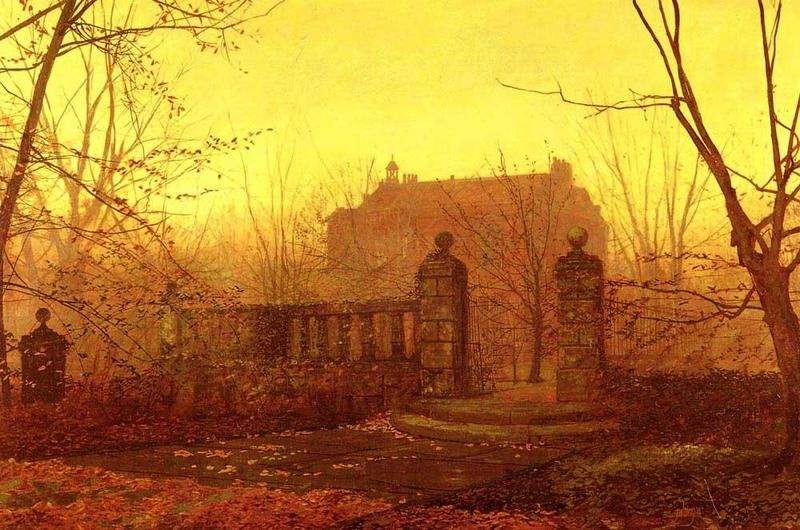
The trees are now turning from green to gold
And the sun is now fading
I wish I could hold you closer
With a deepening heart, no words to say
You will find that the world has changed forever
The trees are now turning from green to gold
And the sun is now fading
I wish I could hold you closer
Monday, March 05, 2007
Midnight Sun

The story is centered around Kaoru, who is out almost every night playing and singing in front of the train station. At day she sleeps, but every morning she sits by the window of her room to watch a young surfer, Koji Fujishiro (藤代 孝治), played by Takashi Tsukamoto, who usually waits by a bus stop for his friends before they go surfing each morning. She develops a crush on the boy, even though she doesn't even know him.
Until one night, when she is playing as usual by the train station she sees Koji pass by. She leaves her guitar and runs after him, running into him and knocking him over when she finally catches up to him by a tram crossing. She then proceeds to clumsily introduce herself in a way that leaves Koji utterly confused and her friend embarrassed. When her friend drags her home, they sit by Kaoru's window while they watch Koji meet up with his friends by the bus stop. Kaoru explains everything, and her friend notes that she probably goes to the same school as him, and offers to spy on him with a camcorder and find out about him for her.
The next night she sits by the bus stop before going home after singing, and she plays a song there and sings with her eyes closed, and afterwards opens them to find Kouji having arrived on his scooter. Both embarrassed, they start talking and Koji eventually promises to meet her and listen to her sing another night, at the start of the school holidays. When they meet up, another, obnoxious street performer has taken her spot in front of the train station. Koji decides to take her to the city, where after running around seeing the sights, she starts playing in a street square. A huge crowd gathers to hear her play and sing. After they sit on stairs and watch the ocean. A moment after Koji asks her out.
other linksunchained melody
Sunday, February 25, 2007
The Classic
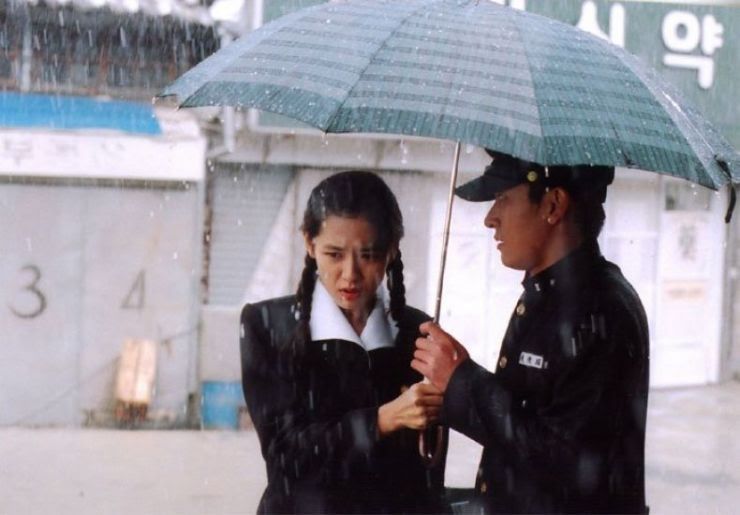
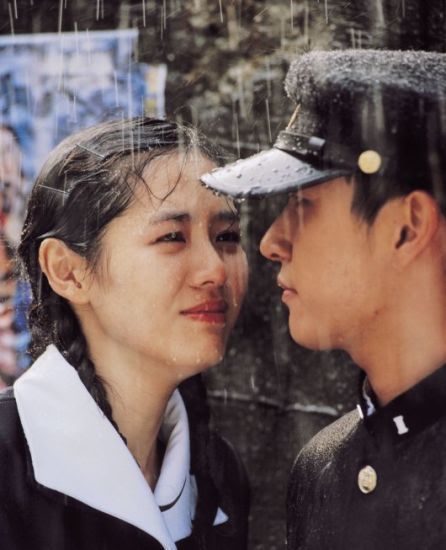

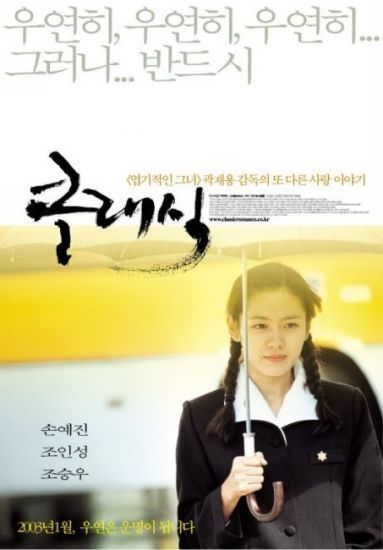
The Classic is a Korean movie originally released in 2003.
The film tells the parallel love stories of a mother and daughter. The story of the mother is told partially in flashbacks.
The movie starts in the present day. The daughter, Ji-Hae (Son Ye Jin), is cleaning up around her house when she comes across a box full of old letters that detail the story of her mother, Joo-Hee (also played by Son Ye Jin), in a dramatic tour de force. Periodically in the movie, Ji-Hae reads one of those letters, which starts a flashback scene in which the story of the mother is told. These flashbacks are intertwined with Ji-Hae's own story, in which she falls for a fellow student involved in the school theater.
The movie details both relationships. The mother, Joo-Hee, visits the countryside as a student one summer and meets Joon-Ha (Jo Seung Woo). Together they explore the countryside, playing near a river which they both will always remember as their special place. When a storm starts, and they take shelter together under a tree, but not before Joo-Hee twists her ankle and is rendered helpless. Joon-Ha takes her on his back and they run home, only to be confronted by her parents. Before they separate, Joo-Hee gives him a necklace, which he keeps close as a precious reminder of their time together. Unfortunately, as Joon-Ha finds out, a third party prevents any deepening of their relationship. Joo-Hee has been engaged to marry Tae-Soo, Joon-Ha's friend, through her parents. But Tae-Soo, a noble friend, finds out about Joo-Hee and Joon-Ha's attraction and helps the two communicate secretly by using his own name in place of Joon-Ha's in their letters. When Tae-Soo's father finds this out, however, he beats Tae-Soo. Tae-Soo tries unsuccessfully to commit suicide so that his two friends can be together.
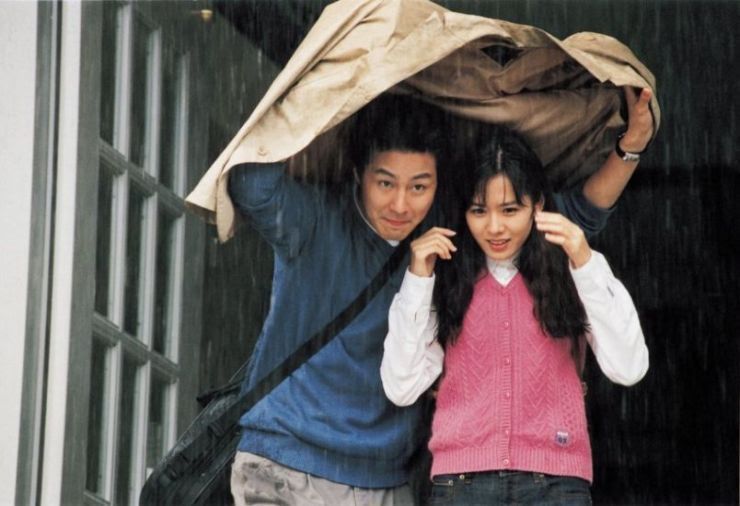
Meanwhile, in the present, Ji-Hae falls for her friend's love interest, but he seems not to notice. Then, in a sweet scene, they take shelter from the rain together under the same tree. He uses his coat to cover both of them and escorts her to where she needs to go. The moment was magical, but she feels his help was only due to his generous nature and not from any feelings for her on his part.
Back in the past, Joon-Ha is guilt-ridden over his friend's attempted suicide and Joo-Hee's own guilt. Determined to prevent any more hurt to her, Joon-Ha joins the army and goes to Vietnam. There he loses his eyesight while saving a fellow soldier. When he returns to Korea, he meets with Joo-Hee, trying to hide his blindness, and convinces her he has married in hopes she will move on with her life. Though heart broken that their relationship cannot continue, she does move on and eventually marries Tae-Soo, Joon-Ha's kind friend. After they have been married for several years and have a young daughter, Ji-Hae, Joo-Hee is approached by friends of Joon-Ha, who relate Joon-Ha's last wish: that his ashes be scattered by Joo-Hee in the river, now reservoir, where they first met. She then finds out that Joon-Ha only got married after she had and had a son her daughter's age. The heart-break is too much; she cries.
In the present, Ji-Hae's own story unfolds. Her love interest reveals his true feelings for Ji-Hae, feelings that mirror her own. It is also revealed that their taking shelter together during the storm was no accident; he purposely left his umbrella behind so that he could join her under the tree. Then, when Ji-Hae pensively reveals her mother's story to him, tears stream down his face. He wordlessly lifts a necklace from around his neck and places it around hers. It is the necklace that Ji-Hae's mother, Joo-Hee, had given to Joon-Ha when they met. The circle is completed; Joo-Hee's daughter and Joon-Ha's son have fallen in love.
Sunday, January 21, 2007
Goodbye, children (Synopsis)
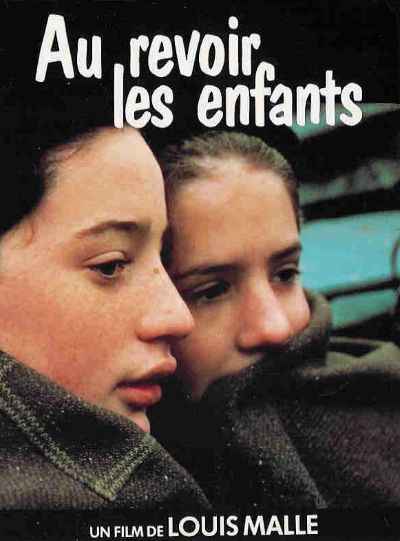
The novel and film are based on an event in the childhood of the author and director, Louis Malle, who at age 12, was attending a Carmelite boarding school near Fontainebleau. The story features a young boy named Julien Quentin, who attends a Catholic boarding school in Vichy France during World War II. In the winter of 1944 in occupied France, Julien, the son of a middle-class family in the north of France, is boarding at the Sainte-Croix College (a junior high school/high school of sorts). Julien returns from Christmas break sad to be returning to the doldrums of school. Resuming class seems uneventful until Father Jean, the head master of this Catholic school presents three new pupils. One of them, Jean Bonnet, is in the same grade and dormitory neighbor of Julien. Julien is intrigued by Bonnet who is a mysterious boy rejected by the whole of the class.
After a while, they bond and a friendship is created between them. One night Julien wakes up and discovers that Bonnet is wearing a kippa and is speaking in a language he cannot understand (Hebrew). Julien ends up understanding the secrecy of his new friend who in fact is Jewish and whose name is not Bonnet, but Kippelstein. Father Jean had agreed, as many religious groups had during the war, to give shelter and a new identity to persecuted Jews. With the allies making progress, perhaps Bonnet will in fact survive this war. But on a cold morning in January 1944, the Gestapo arrives at the small school armed with information from the school's kitchen hand, Joseph, that the school has given shelter to Jews. When the Gestapo officer visits his classroom, Julien unintentionally gives away Jean Bonnet. Father Jean and the three Jewish children, including Jean Bonnet, are taken away. The children are all later executed at Auschwitz concentration camp.
Sunday, December 24, 2006
《满城尽带黄金甲》

剧情简介:
满城的菊花,意态舒展。人的忧思,却绞缠于胸。
金碧辉煌的宫廷里,心绪不宁的皇后领着王子们在等王。宫闱上下,因为这个即将到来的重阳,忙碌得有序而繁密。
一场盛大仪式准备就绪,王却悄然回宫,他好像要有意冷落那些恭候已久的人们,不给他们一个稍微镇定的机会去察言观色,暗自忖量。独自一人的时候他开怀大笑,他的笑里好像有很多的秘密。
王是这样的王,仿佛振一振袍子,也有雷霆迅至。
大的王子是祥,他的秘密太沉太重,矜贵之躯,也被这秘密打发成落魄的形骸。
小的王子是昌,他的笑容灿烂,但是金玉之体,转过身来是温厚端笑,变过身去,嘴角竟有了一丝冷凝。
王后是这深宫禁院里最美的女人,也是天下最美的女人。这样的女人,肚腑中藏着最惊心的秘密与最湿冷的筹划。
大王有令,要一个满目祥和的重阳。大王容得了天下的胸襟,却装不下一个秘密。
满城菊花。长安仗剑。
郁郁不舒、纠葛不尽的命运,带来雷霆暴雨的气象。菊花甬道上,纷沓而来那些藏在秘密中又挤破了秘密的人!
暗战、刀光,斩不断痴缠与无情,只有阴霾压境……
满城的菊花。肃杀。
幕后花絮:
张艺谋执导、耗资3.6亿元打造的电影《满城尽带黄金甲》,定于圣诞黄金档12月21日全球同步上映。3.6亿元的大制作,费用花在哪里,相信金碧辉煌的皇宫已花掉不少金钱。
据香港《明报》报道,《黄金甲》除了台前演员强劲,有蜚声国际的周润发、巩俐及实力派影帝刘烨、最佳新演员周杰伦演出外,幕后班底亦甚有来头,由奚仲 文担任服装设计,配乐方面更由曾为《花样年华》、《十面埋伏》及《霍元甲》等担任音乐总监的梅林茂操刀。而制作费达3.6亿元,话题不比演员阵容逊色。
据报道,张艺谋为了将富丽堂皇的大唐盛世呈现眼前,花上不少财力、人力和时间,他出动接近300个工人,以5个月时间,日以继夜在横店影视城内重建原 大的故宫,宫内宫外每个细节都一丝不苟。 报道指出,宫内金碧辉煌,所有布置包括门及600条柱,全数雕菊花为图案,并漆上金黄色,加上色彩鲜艳的玻璃装饰,在灯光映照下,金光灿烂。而整个皇宫更 铺上特别订制、长达1000米的丝绒地毡。 报道说,宫内处处贴金,宫外亦一样极尽奢华,整个皇宫的外墙同样雕满菊花图案,总长度超过600米,俨如一幅巨型菊花壁画,加上用超过300万菊花铺满 13万平方尺(面积相等于约25个足球场)的花海,登上宫内的露天长廊则铺上一条逾500米长的红、蓝色地毡,沿途摆放
Subscribe to:
Posts (Atom)
