刘培草-背后有光
● 刘培草
朋友在电话上告诉我,身边许多人近来都或轻或重患上了忧郁症。
放下电话,一泓平静心水有了些波动。我没有问她是谁得了忧郁症,因为不想刺探别人的隐私。有信义的朋友不会轻易向人透露自己关爱者的心事,哪怕她和你有多深的交情。道义上她必须保护另一个全盘信赖她的朋友,这朋友正深受忧郁症困扰,却愿意对她推心置腹。
我心绪淡淡受触动,不能帮上什么,只有在心里默默祝福那些或许认识或许不认识的人,早日走出忧郁症的阴影,重拾信心,再见生命的亮光。
其实,我的朋友或许忘了,就在两三年前,我也曾对他说过同样的话:身边许多人近来都接二连三得了忧郁症。
我 们的角色互换,但无论如何,我和他是属于较幸运的——患忧郁症的不是我们自己。不管是已经过去的或目前仍在发生的,我们比较幸运,是因为我们有余力,去帮 助那些深陷忧郁囹圄的人;是因为我们有余情让自己放轻松,当一双耐心地聆听倾诉的耳朵;是因为我们心坎里腾得出一片空间,乐意去载负别人难以承受的重。
患忧郁症不是什么羞耻的事,现代都市生活竞争压力越来越大,任何性格再坚强、意志再坚定的人,都有可能在不自觉或不能自己中得了忧郁症。过去有段日子,亲友中就有平日性情极为开朗乐观的人,遭忧郁症来袭,而且缠绵良久才康复。
他们总是精神涣散、焦虑心悸、食欲不振、睡不安宁,或万念俱灰,对平日喜爱的事物完全失去兴趣,或对自己完全丧失信心,夸大一切问题的艰难与严重性。他们或沉默不语,或一再重复琐碎与唠叨,左不是右不行,对别人的劝解与开导总是听不进耳。
他们最需要的其实就是身边人耐力持久的体恤与关怀,而最重要的他们必须“认症”——坦白承认自己得了忧郁症,同时与心理医生合作,听从指示定时服药,十之八九的忧郁症患者都有痊愈的一天。
人生有时很吊诡,可曾想过:生命中有阴影,是因为有光源?当生活面向幽暗的时候,往往是因为自己的身体把背后亮光遮挡了。既然光在背后,只有你轻轻转动身躯,必然就见到灿亮的光华,不是吗?
这个比喻是外甥君伟最近告诉我的,很受用。是的,光就在那里,只要你愿意换个角度去看人生。
~I would have you smile, not grief for those whose time has come
Friday, March 30, 2007

Friday, March 16, 2007
Colossal squid's headache for science
Colossal squid's headache for science
| By Kim Griggs Science reporter, New Zealand |

It is believed to be the first ever intact adult colossal squid to be landed. The squid took about two hours to land


 Enlarge Image
And for now, this beast of the deep - all 495kg (1,090lb) of it - is safely frozen in a one-cubic-metre block of ice at New Zealand's national museum, Te Papa Tongarewa, in Wellington.
The squid (Mesonychoteuthis hamiltoni) came into the institution this week after being caught last month by fishermen operating in Antarctic waters.
Eventually, when the curators at Te Papa are ready, this unique specimen will be thawed to allow detailed investigation.
But that could be up to a year away.
The entire storage area for Te Papa's "wet" collection is being renovated, and the squid will not have a permanent home until that work is completed.  Bruce Marshall

Only then can the delicate work of un-freezing this massive mollusc begin.
Dead lump
"It's got to be thawed out slowly. You can't put hot water on it, you've just got to thaw it out naturally," says Te Papa's mollsuca collections manager Bruce Marshall.
To minimise handling of the precious specimen, the colossal squid will probably have its temperature raised, over days, in the tank in which it will finally be "fixed".
"We don't want to move it too much," says Marshall.
"When a thing like that is in the water, it's neutrally buoyant.
"But, of course, when you get it out of the water, you've got a big lump of weight and you could try lifting it and your hands would go right through.  The squid could well be the largest specimen ever found
"Already it's got puncture marks from the net."
Once un-frozen, the creature will be fixed, or embalmed, and then a long-term preservative will be used.
"What I mean by a fixing tank is a tank that you lay it out in, in a natural position, and you then make all the adjustments - align all the arms, pack out the body and all of that. Then you have it in a, say, 5% formalin solution.
"It will require the biggest tank of anything we've got."
Sexing squid
Mesonychoteuthis hamiltoni was first identified in 1925 after two tentacles were recovered from a sperm whale's stomach. Since then, only a handful of colossal squid have ever been sighted.
Two were found in the Ross Sea, and another turned up near South Georgia in 2005.
The colossal squid has one of the largest beaks known on any squid, and also has unique swivelling hooks on the clubs at the ends of its tentacles. SIZE COMPARISON 
This latest colossal squid was caught by a New Zealand fishing vessel in Antarctica's Ross Sea in early February.
Next week will see an official handover from New Zealand's Fisheries Minister, Jim Anderton, to Te Papa's chief executive, Dr Seddon Bennington.
Scientists will be keen to ascertain the creature's gender; and then we may get a little closer to understanding just how big these squid can grow.
Marshall thinks that given its size - an estimated 10m (33ft) in length - it is likely to be a female, as female squid are often larger than males.
"It's extremely unlikely to be a male," says Marshall. "If it is a male, the mind boggles at how big the female would be."
Thursday, March 15, 2007


Wednesday, March 14, 2007
木兰词
木兰词
唧唧复唧唧,木兰当户织。不闻机杼声,唯闻女叹息。问女何所思?问女何所忆?
女亦无所思,女亦无所忆。昨夜见军帖,可汗大点兵,军书十二卷,卷卷有爷名。
阿爷无大儿,木兰无长兄,愿为市鞍马,从此替爷征。
东市买骏马,西市买鞍鞯,南市买辔头,北市买长鞭。朝辞爷娘去,暮宿黄河边。
不闻爷娘唤女声,但闻黄河流水鸣溅溅。旦辞黄河去,暮至黑山头。不闻爷娘唤女
声,但闻燕山胡骑声啾啾。
万里赴戎机,关山度若飞。朔气传金柝,寒光照铁衣。将军百战死,壮士十年归。
归来见天子,天子坐明堂。策勋十二转,赏赐百千强。可汗问所欲,“木兰不用尚
书郎,愿借明驼千里足,送儿还故乡。”
爷娘闻女来,出郭相扶将。阿姊闻妹来,当户理红妆。小弟闻姊来,磨刀霍霍向猪
羊。开我东阁门,坐我西阁床。脱我战时袍,著我旧时裳。当窗理云鬓,对镜贴花
黄。出门看火伴,火伴皆惊惶。同行十二年,不知木兰是女郎。
“雄兔脚扑朔,雌兔眼迷离;两兔傍地走,安能辨我是雄雌!”
WHEN THE OTHER APPEARS ON THE SCENE
WHEN THE OTHER APPEARS ON THE SCENE
by Umberto Eco
This article is derived from an exchange of four letters with Cardinal Martini. The following letter is Eco’s reply to a question the cardinal had asked him: “What is the basis of the certainty and necessity for moral action of those who, in order to establish the absolute nature of an ethic, do not intend to appeal to metaphysical principles or transcendental values, or even to universally valid categorical imperatives?”
— The Editors
Dear Carlo Maria Martini,
Your letter has extricated me from one serious dilemma only to leave me on the horns of another that is equally awkward. Until now it has been up to me (through no decision of mine) to open the debate, and he who talks first inevitably puts his questions and invites the other to reply. My predicament springs from my feeling inquisitorial. And I very much appreciated the firmness and humility with which you, on three occasions, exploded the myth that would have us believe that Jesuits always answer a question with another question.
But now I am at a loss as to how to reply to your question, because my answer would be significant had I had a lay upbringing. But in fact I received a strongly Catholic education until (just to record the moment of the breach) the age of twenty-two. For me, the lay point of view was not a passively absorbed heritage, but rather the hard-won result of a long and slow process of change, and I always wonder whether some of my moral convictions do not still depend on religious impressions received early in my development. Now, in my maturity, I have seen (in a foreign Catholic university that also employs lay teaching staff, requiring of them no more than a manifestation of formal respect during religious-academic rituals) some of my colleagues take the sacraments without their believing in the Real Presence, and therefore without their having taken confession beforehand. With a tremor, after so many years, I felt once more the horror of sacrilege.
Nonetheless, I feel I can explain the foundations on which my “lay religiosity” rests—because I firmly hold that there are forms of religiosity, and therefore a sense of the Holy, of the Limit, of questioning and of awaiting, of communion with something that transcends us, even in the absence of faith in a personal and provident divinity. But, as I see from your letter, you know this too. What you are asking yourself is what is binding, captivating, and inalienable in these forms of ethic.
I should like to approach things in a roundabout way. Certain ethical problems became clearer to me on considering some problems in semantics—and please don’t worry if some people say that we are talking in a complicated way: they might have been encouraged to think too simply by mass-media “revelations,” predictable by definition. Let them instead learn to “think complicated,” because neither the mystery nor the evidence is simple.
My problem hinged on the existence of “semantic universals,” or in other words, elementary notions that are common to the entire human species and can be expressed in all languages. Not such an easy problem, given that many cultures do not recognize notions that strike us as obvious: for example, that of substance to which certain properties belong (as when we say that “the apple is red”) or that of identity (a=a). However, I am convinced that there certainly are notions common to all cultures, and that they all refer to the position of our body in space.
We are erect animals, so it is tiring to stay upside down for long, and therefore we have a common notion of up and down, tending to favor the first over the second. Likewise, we have notions of right and left, of standing still and of walking, of standing up and lying down, of crawling and jumping, of waking and sleeping. Since we have limbs, we all know what it means to beat against a resistant material, to penetrate a soft or liquid substance, to crush, to drum, to pummel, to kick, and perhaps even to dance as well. The list is a long one, and could include seeing, hearing, eating or drinking, swallowing or excreting. And certainly every human being has notions about the meaning of perceiving, recalling, feeling, desire, fear, sorrow, relief, pleasure or pain, and of emitting sounds that express these things. Therefore (and we are already in the sphere of rights) there are universal concepts regarding constriction: we do not want anyone to prevent us from talking, seeing, listening, sleeping, swallowing, or excreting, or from going where we wish; we suffer if someone binds or segregates us, beats, wounds, or kills us, or subjects us to physical or psychological torture that diminishes or annuls our capacity to think.
Note that until now I have described only a sort of bestial and solitary Adam, who still knows nothing of sexual relations, the pleasures of dialogue, love for his offspring, or the pain of losing a loved one; but already in this phase, at least for us (if not for him or for her) this semantics has become the basis of an ethic: first and foremost we must respect the rights of the corporeality of others, which also include the right to talk and think. If our fellows had respected these “rights of the body,” we would never have had the Slaughter of Innocents, the Christians in the circus, Saint Bartholomew’s Night, the burning of heretics, the death camps, censorship, child labor in mines, or the rapes in Bosnia.
But how is it that this marveling and ferocious beast that I have described immediately works out his (or her) instinctive repertoire of universal notions and can reach the point where he understands not only that he wishes to do certain things and does not wish other things to be done to him, but also that he should not do to others what he does not wish to be done to him? Because, luckily, Eden is soon populated. The ethical dimension begins when the other appears on the scene. Every law, moral or juridical as it may be, regulates interpersonal relationships, including those with an other who imposes that law.
You too say that virtuous laypersons are persuaded that the other is within us. However, this is not a vague emotional inclination but a fundamental condition. As we are taught by the most secular of human sciences, it is the other, it is his look, that defines and forms us. Just as we cannot live without eating or sleeping, we cannot understand who we are without the look and response of the other. Even those who kill, rape, rob, or oppress do this in exceptional moments, but they spend the rest of their lives soliciting from their fellows approval, love, respect, and praise. And even from those they humiliate they ask the recognition of fear and submission. In the absence of this recognition, the newborn baby abandoned in the forest does not become humanized (or like Tarzan seeks at all costs the other in the face of an ape), and the result of living in a community in which everyone had decided systematically never to look at us, treating us as if we did not exist, would be madness or death.
Why is it then that there are or have been cultures that approve of massacre, cannibalism, or the humiliation of the bodies of others? Simply because such cultures restrict the concept of “others” to the tribal community (or the ethnic group) and consider “barbarians” to be nonhumans; but not even the Crusaders felt that unbelievers were fellowmen worthy of an excessive degree of love. The fact is that the recognition of the roles of others, the necessity to respect in them those requirements we consider essential for ourselves, is the product of thousands of years of development. Even the Christian commandment to love was enunciated, and laboriously accepted, only when the time was ripe.
But you ask me: Is this awareness of the importance of the other sufficient to provide us with an absolute basis, an immutable foundation for ethical behavior? It would suffice for me to reply that even those things that you define as “absolute foundations” do not prevent many believers from knowingly sinning, and there the matter would end. The temptation of evil is present even in those who possess a well-founded and revealed notion of good. But I want to tell you two anecdotes, which gave me much to think about.
One concerns a writer, who describes himself as a Catholic, albeit of the sui generis variety, whose name I shall not give only because he told me what I am about to quote in the course of a private conversation, and I am not a talebearer. It was in the days of the papacy of John XXIII, and my elderly friend, in enthusiastically praising the pope’s virtues, said (with clearly paradoxical intentions): “Pope John must be an atheist. Only a man who does not believe in God can love his fellowman so much!” Like all paradoxes, this one also contains a grain of truth: without troubling to consider the atheist (a type whose psychology eludes me, because, as Kant observed, I do not see how one can not believe in God, and hold that His existence can not be proved, and then firmly believe in the nonexistence of God, holding that it can be proved), it seems clear to me that a person who has never had any experience of the transcendent, or who has lost it, can make sense of his or her life and death, can be comforted by love for others, and by the attempt to guarantee someone else a life to be lived even after his or her own death. Of course, there are people who do not believe and nonetheless do not trouble to make sense of their own death, but there are also those who say they believe but who would be prepared to rip the heart out of a child in order to ward off death. The strength of an ethic is judged on the behavior of saints, not on the foolish cujus deus venter est.
This brings me to the second anecdote. I was still a sixteen-year-old Catholic boy when I happened to cross swords in a verbal duel with an older acquaintance who was a known “communist,” in the sense in which the term was employed in the terrible fifties. And since he was provoking me, I asked him the decisive question: how could he, as a nonbeliever, make sense of that otherwise senseless event that was his own death? And he replied: “By asking before dying that I might have a civil funeral. And so I am no more, but I have set an example for others.” I think that you too can admire the profound faith in the continuity of life, the absolute sense of duty that inspired his reply. And it is this sentiment that has induced many nonbelievers to die under torture rather than betray their friends, and others to catch the plague in order to look after plague victims. And sometimes it is also the only thing that drives a philosopher to philosophize, and a writer to write: to leave a message in the bottle, because in some way what we believe in, or what we think is beautiful, might be believed in or found beautiful by posterity.
Is this feeling really strong enough to justify an ethic as determined and inflexible, as solidly established as the ethic of those who believe in revealed morality, in the survival of the soul, in reward and punishment? I have tried to base the principles of a lay ethics on a natural reality (and, as such, in your view too, the result of a divine plan) like our corporeality and the idea that we instinctively know that we have a soul (or something that serves as such) only by virtue of the presence of others. It would appear that what I have defined as a “lay ethics” is at bottom a natural ethics, which not even believers deny. Is not the natural instinct, brought to the right level of maturity and self-awareness, a foundation offering sufficient guarantees? Of course we may think this an insufficient spur to virtue. “In any case,” nonbelievers can say, “no one will know of the evil I am secretly doing.” But those who do not believe think that no one is watching them from on high, and therefore they also know that—precisely for this reason— there is not even a Someone who may forgive. If such people know they have done ill, their solitude shall be without end, and their death desperate. They will opt, more than believers, for the purification of public confession, they will ask the forgiveness of others. This they know, in the deepest part of their being, and therefore they know that they should forgive others first. Otherwise how could we explain that remorse is a feeling known to nonbelievers too?
I should not like to establish a clear-cut opposition between those who believe in a transcendent God and those who believe in no superindividual principle. I should like to point out that it was precisely ethics that inspired the title of Spinoza’s great work, which begins with a definition of God as the cause of Himself. But Spinoza’s divinity, as we well know, is neither transcendent nor personal: yet even the vision of a great and single cosmic substance in which one day we shall be reabsorbed can reveal a vision of tolerance and benevolence precisely because we are all interested in the equilibrium and harmony of this sole substance. This is so because we tend to think it impossible for this substance not to be in some way enhanced or deformed by the things we have done over the millennia. Thus I would also dare say (this is not a metaphysical hypothesis, it is merely a timid concession to the hope that never abandons us) that even from such a standpoint we could table the problem of some kind of life after death. Today the electronic universe suggests that sequences of messages can be transferred from one physical medium to another without losing their unique characteristics, and it seems that they can exist even as pure immaterial algorithms when, one medium have been abandoned, they are not transcribed again onto another. And who knows whether death, rather than an implosion, is not an explosion and the impressing, somewhere, among the vortices of the universe, of the software (which others call “soul”) we have developed in life, made up of memories and personal remorse, and therefore of incurable suffering, or of a sense of peace for duty done, and love.
But you say that, without the example and the word of Christ, all lay ethics would lack a basic justification imbued with an ineluctable power of conviction. Why deprive laypersons of the right to avail themselves of the example of a forgiving Christ? Try, Carlo Maria Martini, for the good of the discussion and of the dialogue in which you believe, to accept even if only for a moment the idea that there is no God; that man appeared in the world out of a blunder on the part of maladroit fate, delivered not only unto his mortal condition but also condemned to be aware of this, and for this reason the most imperfect of all creatures (if I may be permitted the echoes of Leopardi in this suggestion). This man, in order to find the courage to await death, would necessarily become a religious animal, and would aspire to the construction of narratives capable of providing him with an explanation and a model, an exemplary image. And among the many stories he imagines—some dazzling, some awe-inspiring, some pathetically comforting—in the fullness of time he has at a certain point the religious, moral, and poetic strength to conceive the model of Christ, of universal love, of forgiveness for enemies, of a life sacrificed that others may be saved. If I were a traveler from a distant galaxy and I found myself confronted with a species capable of proposing this model, I would be filled with admiration for such theogonic energy, and I would judge this wretched and vile species, which has committed so many horrors, redeemed were it only for the fact that it has managed to wish and to believe that all this is the truth.
You are now free to leave the hypothesis to others: but admit that even if Christ were only the subject of a great story, the fact that this story could have been imagined and desired by humans, creatures who know only that they do not know, would be just as miraculous (miraculously mysterious) as the son of a real God’s being made flesh. This natural and worldly mystery would not cease to move and ennoble the hearts of those who do not believe.
This is why I believe that, on the fundamental points, a natural ethic— respected for the profound religiosity that inspires it—can find common ground with the principles of an ethic founded on faith in transcendence, which cannot fail to recognize that natural principles have been carved into our hearts on the basis of a plan for salvation. If this leaves, as it certainly does, margins that may not overlap, it is no different from what happens when different religions encounter one another. And in conflicts of faith, charity and prudence must prevail.
Copyright © 1997 RCS Libri S.P.A. English Translation copyright © 2001 by Alastair McEwen. This is a translation of Cinque Seritti Morali. Published by Arrangement with Harcourt, Inc.
Copyright of Cross Currents is the property of Association for Religion & Intellectual Life and its content may not be copied without the copyright holder's express written permission except for the print or download capabilities of the retrieval software used for access. This content is intended solely for the use of the individual user.
Source: Cross Currents, Fall 2002, Vol. 52, No 3.
Much Ado About Nothing
- Friendship is constant in all other things save in the office and affairs of love. (Claudio, Act 2 Sc 1)
- But, masters, remember that I am an ass; though it be not written down, yet forget not that I am an ass. (Dogberry, Act 4 Sc 2)
- In time, the savage bull doth bear the yoke. (Don Pedro, Act 1 Sc 1)
- If we can do this, then Cupid is no longer an archer, for we are the only love gods! - (Don Pedro, Act 2)
I do love nothing in the world so well as you: is not that strange?
Sigh no more, ladies, sigh nor more;
Men were deceivers ever;
One foot in sea and one on shore,
To one thing constant never;
Then sigh not so,
But let them go,
And be you blithe and bonny;
Converting all your sounds of woe
Into. Hey nonny, nonny.
Sing no more ditties, sing no more,
Or dumps so dull and heavy;
The fraud of men was ever so,
Since summer first was leavy.
Then sigh not so,
But let them go,
And be you blithe and bonny,
Converting all your sounds of woe
Into. Hey, nonny, nonny.
过华清宫
过华清宫
杜牧
长安回望绣成堆,
山顶千门次第开。
一骑红尘妃子笑,
无人知是荔枝来。
作者】
803-852,字牧之,排行十三,京兆万年(今陕西西安)人。宰相杜佑之孙, 祖居长安南郊樊川,因称杜樊川。大和二年 (828)年进士,为弘文馆校书郎。 历参沈傅师江西观察使、宣歙观察使及牛僧孺淮南节度使幕府。入为监察御史。 武宗时,出为黄州、池州、睦州刺史。宣宗时,为司勋员外郎,终中书舍人。 世称杜司勋。工诗、赋、古文。诗学杜甫而有独创,骨气豪宕,风神俊朗,尤 擅七律七绝,为晚唐大家。与李商隐齐名,世称“小李杜”。有《樊川文集》, 《全唐诗》存诗八卷。
【注释】
①华清宫:故址在今陕西临潼县骊山,是唐明皇与杨贵妃游乐之地。
【品评】
杜牧写华清宫诗有五排《华清宫三十韵》一首、七绝 《华清宫》 一首、 《过华清宫绝句》三首。这一首流传最广。关于唐明皇与杨贵妃荒淫误国,杜甫以来的不少诗人已作过充分反映。此诗也表现了这一主题,却选取了新鲜角 度,收到了独特效果。杨贵妃喜吃鲜荔枝,唐明皇命蜀中、南海并献。驿骑传 送,六、七日间飞驰数千里, 送到长安, 色味未变。此诗即从此处切入,以 “一骑红尘”与“妃子笑”之间的戏剧性冲突为中心组织全诗,构思、布局之 妙,令人叹服。
首句“长安回望”四字极为重要。解此诗者或避而不谈,或说作者已“过” 华清而进入长安,又回头遥望。其实,这是从“一骑”方面设想的。长安是当时的京城,明皇应在京城日理万机,妃子自应留在京城,因而飞送荔枝者直奔长安,而 皇帝、贵妃却在骊山行乐!这就出现了“长安回望绣成堆”的镜头。
唐明皇时,骊山遍植花木如绵绣,故称绣岭。用“绣成堆”写“一骑”遥望中的骊山总貌,很传神。次句承 “绣成堆” 写骊山华清宫的建筑群。这时候,“一骑”已近骊山,望见“山顶千门次第开”;山上人也早已望见“红尘”飞扬,“一骑”将到,因而将“山顶千门”次第打开。 紧接着,便出现了“一骑红尘妃子笑”的戏剧性场景。一方面,是以卷起“红尘”的高速日夜奔驰,送来荔枝的“一骑”,挥汗如雨,苦不堪言;另一方面,则是得 到新鲜荔枝的贵妃,嫣然一笑,乐不可支。两相对照,蕴含着对骄奢淫逸生活的无言谴责。前三句诗根本不提荔枝,如果象前面分析的那样句句讲荔枝,寻就太平淡 了。读前三句,压根儿不知道为什么要从长安回望骊山,不知道“山顶千门”为什么要一重接一重地打开,更不知道“一骑红尘”是干什么的、“妃子”为什么要 “笑”,给读者留下一连患悬念。最后一句,应该是解释悬念了,可又出人意料地用了一个否定句:“无人知是荔枝来。”的确,卷风扬尘,“一骑”急驰,华清宫 千门,从山下到山顶一重重为他敞开,谁都会认为那是飞送关于军国大事的紧急情报,怎能设想那是为贵妃送荔枝!“无人知”三字画龙点睛,蕴含深广,把全诗的 思想境界提升到惊人的高度。
周幽王的烽火台也在骊山顶上。作者让杨贵妃在骊山“山顶”望见“一骑红尘”,并且特意用“妃子笑”三字,是有意使读者产生联想,想起“褒妃一笑倾周”的历史教训的。
参考资料:http://www.efruit.com.cn/lzw/lzwh/lzsc/03.htm
Those Who Can't Do, Teach
Most people are quite familiar with the saying, “Those who can’t do, teach.” This statement suggests that people who have failed or would be failures in the world outside of academia end up as teachers.
The origins of this quote and various permutations of it are unclear. An early quote of similar meaning comes from George Bernard Shaw in "Maxims for Revolutionists" in Man and Superman (1903). The history of viewing the teaching profession with contempt or at the very least disregard may date back to the origins of the apple for the teacher custom.
In the Middle Ages, knowledge was viewed as God’s gift. Since it was God’s gift, it was seen as wrong to charge for it. As a result of this view, teachers at many institutions were not paid at all for their work. They had to rely on the gifts and charity of appreciative students.
Sometimes, a teacher was lucky to receive an apple so he’d have something to eat. It’s rather difficult to develop a mindset that a profession is pursued by people of high capability if that service is offered free of charge.
The value of the work being done as well as the education level required to perform that work is reflected in the salary, yet teachers are still relatively low-paid compared to other jobs with similar educational requirements. Additionally, teaching is one of the few professions that require a higher education, yet people commonly suggest those who take that career path are deficient in some fashion.
Being a teacher requires more than a standard Bachelors degree, but many people still view teaching as a profession for lazy or unskilled people. A favored chestnut among those who hold such views is the anecdotal story about the incompetence of teachers who teach topics related to professions in which they have never engaged.
For example, a business teacher who has never successfully run a business can’t possibly know real world business well enough to teach the topic effectively.
The attitude that a teacher must have worked in the profession that his students will eventually pursue is a reflection of ignorance of the point of education. There is a difference between receiving an education and attending vocational school. A vocational or technical school teaches specific skills that a student carries over to a job.
Education is about equipping students with a broad base of knowledge they can draw on to become successful in the occupations they pursue.
It is up to the student to digest the information he receives and find an application for it in his life, not for the teacher teach him each individual step. Considering that each company and job demands a customized set of skills, this is certainly a more reasonable approach. Even similar jobs may require different approaches at different types of businesses.
The sales tactics for selling computers requires a different approach than selling cars. Also, companies in the same industry often adopt their own approach. Marketing at Apple, where the focus is on design and limited numbers of models, would be a very different job than marketing at Dell, where the emphasis is on frequent sales, different equipment combinations, and low price.
Universities need only teach the fundamentals of each discipline and the companies can do the rest.
If you feel teachers don’t know what they’re talking about when it comes to the real world, then you’re missing the point of education. The point is not to memorize a sequence of steps to be regurgitated as needed at a future job. Teachers are there to help you learn how to be smart enough to figure out those steps on your own.
Those Who Can, Do… TEACH!
Those Who Can, Do… TEACH!
In Front of the Class
by Max Fischer, EducationWorld.com
Max Fischer recently attended a local Chamber of Commerce meeting. The evening's motivational speaker got Max thinking about how successful businesspeople and successful teachers have much more in common than either of them might think.
Some of the harshest critics of education can be found in the business world. Steeped in the highly competitive atmosphere of business, local entrepreneurs are way too focused on overcoming competition and other obstacles, and on the almighty bottom line, to possibly comprehend what goes on in the classroom. Drop any business leader from your community in a classroom, and watch them flail!
The converse is also assumed true: Educators could not possibly understand what running a business is like. "Those that can, do; those that can't, teach," business people have often said with an air of disparagement.
Just a few weeks ago I had the opportunity to attend the annual awards ceremony of my local Chamber of Commerce. That evening's presenter was a motivational speaker whose main bread-and-butter is business-training seminars. The guy -- an absolutely engaging speaker, I must say -- focused his comments on the most critical elements of successful businesses. As I listened to him talk, I was I was amazed at how closely his thoughts about successful business people paralleled my take on the skills it takes to be a successful classroom teacher. Let's see if you agree…
- Relationships are key.
Customers don't buy products from people they don't like. A condescending capitalist will struggle to turn a profit.
A teacher who expects respect from his students -- or parents or colleagues -- without giving any in return is bound to fail.
- Business marketing must excite the customers; they are your bottom line.
Successful businesses effectively market their products or services by linking them to positive feelings. Slogans, jingles, attractive models, and celebrities are tools of the trade for accomplishing that goal.
Being able to motivate and engage learners is of paramount importance for any teacher. Our paying customers -- parents and other taxpayers -- really do take note when their children come home from school engaged and excited.
- Being able to deal with change with a positive attitude is a key to success.
What ever became of the tech exec who proclaimed in 1979 that home computers would never be practical?
While many teachers might not be endeared by "No Child Left Behind," most of us are able to strain its vital message: the status quo isn't good enough. Thinking outside the box to reach under-performing students is a cause whose time has come.
More In Common Than You Think
- Experimentation -- and, yes, failure -- is a part of every business; it is at the root of almost every success.
Thomas Edison once said, "I have not failed. I've just found ten thousand ways that won't work." A certain level of that adventurous spirit is required to succeed at developing new products and services to woo customers.
Teachers must honor the best of education's established practices, but they can't shy away from investigating new methods to reach students. Instructional methodology must be perpetually evaluated and improved upon -- or tossed aside as ineffective.
- Sweat the details, and go the extra mile.
Our speaker regaled his audience on how movie actor Jim Carrey goes to great lengths to choreograph his antics in each scene of a movie. Similarly, he said, business people must anticipate and have a plan for meeting their clients' needs; they must always be willing to go the extra mile to accomplish that.
The most successful teachers take time to write students congratulatory notes, dissect the pace of each day's lesson, and give concerned parents timely updates. And they use their summers to develop new skills. Successful teaching, like a successful business (or successful acting), is not a fly-by-the-seat-of-your-pants operation.
- Lead your people; don't push them.
The speaker's most animated comments were reserved for the relationship between a boss and the worker bees. A business manager who can appreciate and capitalize on the strengths of each employee is one who can develop a well-rounded team and a business that will thrive.
One of a teacher's primary objectives is to recognize and build upon each student's strengths. Often a student's strengths can be used to improve skills that might not be so strong. Our aim is to engage all students -- one student at a time -- in achieving our learning goals.
With One Big Difference
While I was one of just a handful of non-business leaders in the audience, I found little in our speaker's remarks to which I could not relate. I found myself nodding in total agreement until he made one last comment. "I've never gotten angry with my personnel," he said. "I've only gotten angry with the suppliers of inferior material. I really let those suppliers have it for jeopardizing my business!"
And therein lies the difference between teaching and business: Teachers may rage internally at the dysfunctions of families and society that our students endure. We cannot, however, unleash our anger at the materials we are expected to transform. Businesses can reject inferior material; we embrace our "materials" and nurture them.
I left the awards ceremony wondering how many of the movers and shakers of local business in that audience really understood how closely their best practices relate to those of teachers. With such significant common ground, I have to wonder how much more could be accomplished for students if members of both professions worked together more closely. If business leaders connected with schools in their communities they would quickly learn what you and I know: Those who can, do… teach!
About the Author
A teacher for nearly three decades, Max Fischer currently teaches seventh graders the marvels of ancient and medieval history. A National Board certified teacher in the area of early adolescence social studies/history, Max has authored nine resource books for teachers in the fields of social studies, health, and math. You can read a previously published article about Fischer: Simulations Engage Students in Active Learning.
What if the asteroid had missed?
What if the asteroid had missed?
| By Georgie Hatt-Cook BBC Horizon |
The extinction of the dinosaurs was most probably caused by an asteroid hitting the Earth - but what would have happened if the giant space rock had missed?  It could have all been so different Horizon: My pet dinosaur Tue 13 March, 2100 GMT, BBC2

For a long time it was thought that dinosaurs were a lumbering, cold-blooded extinction just waiting to happen. Even the word dinosaur has come to mean something that has outlived its time.
The scientific argument was that as cold-blooded creatures, dinosaurs would not have stood a chance of surviving an ice age.
"According to the first imaginings of palaeontologists and the general public about dinosaurs, we thought of them as reptiles," says Kristi Curry-Rogers, from the Science Museum of Minnesota.
"'Reptile' is a word which comes with a lot of other connotations, like cold-blooded, slow-moving, sprawling, scaly skins, kind of stupid."
But more recent discoveries, such as dinosaur fossils in both polar regions, reveal that these animals were far more adaptable than previously thought.
Dr Curry-Rogers has analysed fossilised bones from Late Cretaceous (65-99 million years ago) dinosaurs and found them to have more in common with mammals and birds than reptiles.
The evidence points to them being fast-growing and, crucially, that at least some of them were warm-blooded to some degree.
Prof Phil Currie, University of Alberta
"They were perfectly well-adapted to deal with the problems of maintaining a body temperature," Dr Curry-Rogers told the BBC's Horizon programme.
In other words, some of the dinosaurs were more than equipped to survive almost anything that the evolving planet had to throw at them.
Ongoing domination
"They were the superlatives; they were the biggest, the heaviest, the meanest, the longest. You name it, dinosaurs were it," says fellow palaeontologist Phil Currie, from the University of Alberta in Canada, who has access to one of the richest areas of dinosaur research in the world.
"The badlands of Alberta clearly show that at the end of the Cretaceous, dinosaurs were extremely successful still," says Professor Currie, who points to dozens of different dinosaur species living in that one environment at the same time.
Had the asteroid missed, he believes, dinosaurs would have continued to dominate. People-watching at the local supermarket

"We wouldn't have the modern animals that we're used to. Giraffes and elephants and so on; they just wouldn't have evolved because dinosaurs would still be here," says Professor Currie.
Instead of elephants, there would be large plant-devouring sauropods. In place of lions on the plains of Africa would be tyrannosaurs.
Adaptable dinosaurs had it all covered. Dinosaurs could have comfortably colonised many environments, from polar conditions to regions of rivers and forests, jungle and deserts.
A world with dinosaurs in it would be at the expense of most, if not all, of the mammals that we are familiar with today - and all that we rely on them for. No cows, no sheep, no cats equal no milk, no leather, no wool, no domestic companionship.
But milk aside, there could be perfectly suitable dino-substitutes of all kind. A Protoceratops could be as farmable as a pig with the bonus of providing eggs. And an amenable Heterodontosaurus might make a perfect pet. Great with children.
They could even have adapted to current-day habitats, dining on suburban dustbins.
Something like us
Perhaps the most advanced dinosaur at the time of the extinction was the Troodon which was "as cunning as a fox", according to palaeontologist Larry Witmer of Ohio University.
They were small, upright, bi-pedal dinosaurs which lived in large groups. By studying the brain cavity, Witmer has found evidence they possessed good vision and even potentially had a brain structure compatible with problem-solving.
"If Troodon were around today, co-existing with humans, we'd probably call it a pest," says Professor Witmer.
With its substantial brain, long grasping hands and big eyes, could Troodon have evolved to become more intelligent?  It's unlikely mammals and dinosaurs could have shared power
Evolutionary palaeo-biologist Dr Simon Conway Morris believes they could even have evolved along the lines of primates or humans.
"The human is extraordinarily well designed," he says. The whole arrangement is actually designed for a particular mode of life, which, as you can see looking around us, is incredibly successful.
"If it's such a good solution for us, is it so difficult to imagine it could be a good solution for a dinosaur, therefore a 'dinosauroid'?"
But most palaeontologists see the dinosauroid as an insult to dinosaurs.
"Dinosaurs probably would have continued along their dinosaurian trajectory, getting bigger brains and bigger eyes," says Kristi Curry-Rogers.
"But I doubt seriously that any dinosaur would ever end up looking like a person, and it is fairly arrogant to think that the end point of all evolutionary trajectories should sort of emulate human beings."
If the asteroid had missed, there probably wouldn't be humans here today either to find out how it would have turned out.
The impact that ended the golden age of the dinosaurs 65 million years ago made for an extremely bad dinosaur day but it was also a very good mammal day.
Horizon: My Pet Dinosaur is broadcast on BBC Two on Tuesday 13 March at 2100GMTMonday, March 05, 2007
1 Litre of Tears
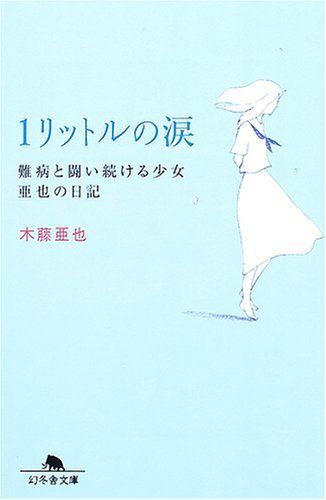
1 Litre of Tears (1リットルの涙 Ichi Rittoru no Namida) is a Japanese television drama for Fuji Television about a girl who was diagnosed with a disease called Spinocerebellar Degeneration when she was 15 years old, and was able to continue her life until her death at the age of 25 years old. Erika Sawajiri played this girl in this drama.
The plot is based on the true story of a Japanese girl named Aya Kito (木藤亜也, July 19, 1962 - May 23, 1988), who had the same disease. She kept writing in her diary to remember her experiences until she could no longer hold a pen. Aya simply wished to live until the end of her life, and the purpose of writing in the diary was to remind herself to not give up. She shed tears many times, at the same time encompassed by the rich love and support from her family and friends. Her diary 1 Litre of Tears was published shortly before her death. It encouraged many people, healthy or diseased, because of its inspiring and courageous messages. As Aya wrote, "Just being alive is such a lovely and wonderful thing."
other links:
wikipedia Ichi Rittoru no Namida
Midnight Sun
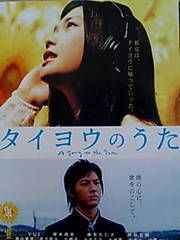
The story is centered around Kaoru, who is out almost every night playing and singing in front of the train station. At day she sleeps, but every morning she sits by the window of her room to watch a young surfer, Koji Fujishiro (藤代 孝治), played by Takashi Tsukamoto, who usually waits by a bus stop for his friends before they go surfing each morning. She develops a crush on the boy, even though she doesn't even know him.
Until one night, when she is playing as usual by the train station she sees Koji pass by. She leaves her guitar and runs after him, running into him and knocking him over when she finally catches up to him by a tram crossing. She then proceeds to clumsily introduce herself in a way that leaves Koji utterly confused and her friend embarrassed. When her friend drags her home, they sit by Kaoru's window while they watch Koji meet up with his friends by the bus stop. Kaoru explains everything, and her friend notes that she probably goes to the same school as him, and offers to spy on him with a camcorder and find out about him for her.
The next night she sits by the bus stop before going home after singing, and she plays a song there and sings with her eyes closed, and afterwards opens them to find Kouji having arrived on his scooter. Both embarrassed, they start talking and Koji eventually promises to meet her and listen to her sing another night, at the start of the school holidays. When they meet up, another, obnoxious street performer has taken her spot in front of the train station. Koji decides to take her to the city, where after running around seeing the sights, she starts playing in a street square. A huge crowd gathers to hear her play and sing. After they sit on stairs and watch the ocean. A moment after Koji asks her out.
other linksunchained melody
Sunday, February 25, 2007
The Classic
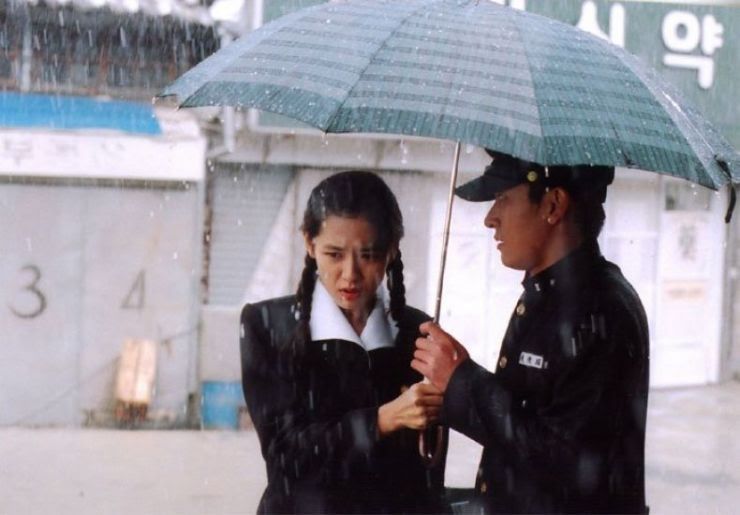
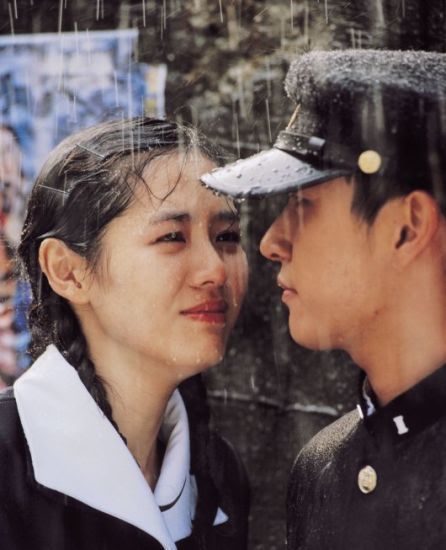
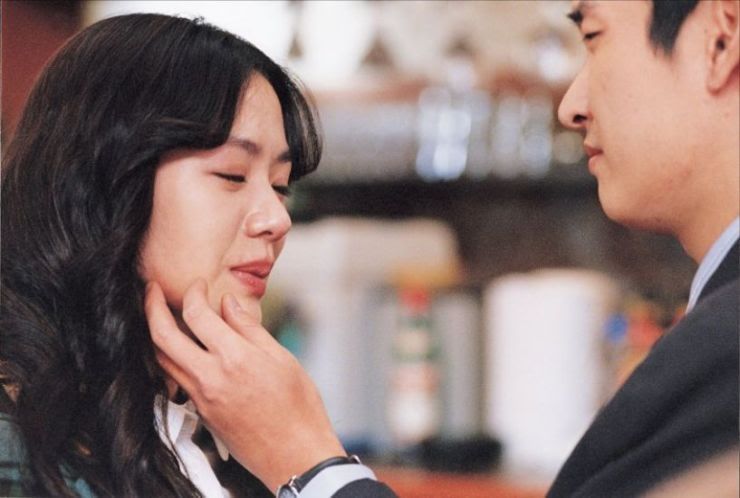
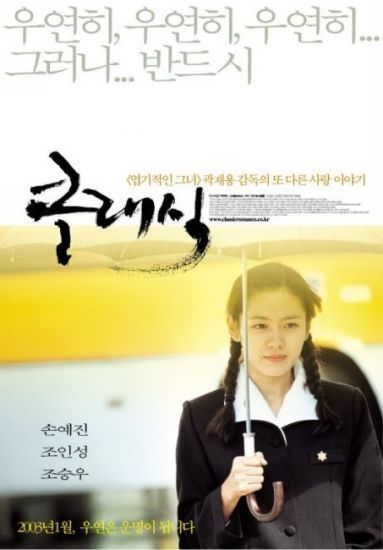
The Classic is a Korean movie originally released in 2003.
The film tells the parallel love stories of a mother and daughter. The story of the mother is told partially in flashbacks.
The movie starts in the present day. The daughter, Ji-Hae (Son Ye Jin), is cleaning up around her house when she comes across a box full of old letters that detail the story of her mother, Joo-Hee (also played by Son Ye Jin), in a dramatic tour de force. Periodically in the movie, Ji-Hae reads one of those letters, which starts a flashback scene in which the story of the mother is told. These flashbacks are intertwined with Ji-Hae's own story, in which she falls for a fellow student involved in the school theater.
The movie details both relationships. The mother, Joo-Hee, visits the countryside as a student one summer and meets Joon-Ha (Jo Seung Woo). Together they explore the countryside, playing near a river which they both will always remember as their special place. When a storm starts, and they take shelter together under a tree, but not before Joo-Hee twists her ankle and is rendered helpless. Joon-Ha takes her on his back and they run home, only to be confronted by her parents. Before they separate, Joo-Hee gives him a necklace, which he keeps close as a precious reminder of their time together. Unfortunately, as Joon-Ha finds out, a third party prevents any deepening of their relationship. Joo-Hee has been engaged to marry Tae-Soo, Joon-Ha's friend, through her parents. But Tae-Soo, a noble friend, finds out about Joo-Hee and Joon-Ha's attraction and helps the two communicate secretly by using his own name in place of Joon-Ha's in their letters. When Tae-Soo's father finds this out, however, he beats Tae-Soo. Tae-Soo tries unsuccessfully to commit suicide so that his two friends can be together.
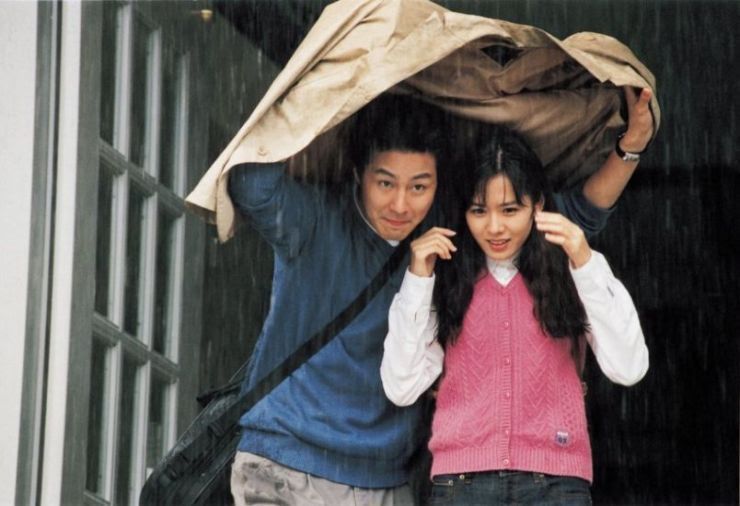
Meanwhile, in the present, Ji-Hae falls for her friend's love interest, but he seems not to notice. Then, in a sweet scene, they take shelter from the rain together under the same tree. He uses his coat to cover both of them and escorts her to where she needs to go. The moment was magical, but she feels his help was only due to his generous nature and not from any feelings for her on his part.
Back in the past, Joon-Ha is guilt-ridden over his friend's attempted suicide and Joo-Hee's own guilt. Determined to prevent any more hurt to her, Joon-Ha joins the army and goes to Vietnam. There he loses his eyesight while saving a fellow soldier. When he returns to Korea, he meets with Joo-Hee, trying to hide his blindness, and convinces her he has married in hopes she will move on with her life. Though heart broken that their relationship cannot continue, she does move on and eventually marries Tae-Soo, Joon-Ha's kind friend. After they have been married for several years and have a young daughter, Ji-Hae, Joo-Hee is approached by friends of Joon-Ha, who relate Joon-Ha's last wish: that his ashes be scattered by Joo-Hee in the river, now reservoir, where they first met. She then finds out that Joon-Ha only got married after she had and had a son her daughter's age. The heart-break is too much; she cries.
In the present, Ji-Hae's own story unfolds. Her love interest reveals his true feelings for Ji-Hae, feelings that mirror her own. It is also revealed that their taking shelter together during the storm was no accident; he purposely left his umbrella behind so that he could join her under the tree. Then, when Ji-Hae pensively reveals her mother's story to him, tears stream down his face. He wordlessly lifts a necklace from around his neck and places it around hers. It is the necklace that Ji-Hae's mother, Joo-Hee, had given to Joon-Ha when they met. The circle is completed; Joo-Hee's daughter and Joon-Ha's son have fallen in love.
Tuesday, February 20, 2007
New language for divided Cameroon
New language for divided Cameroon
| By Francis Ngwa Niba BBC News, Douala |
Teachers in Cameroon are concerned that the new language frananglais - a mixture of French, English and Creole - is affecting the way students speak and write the country's two official languages.
With more than 250 indigenous languages and both French and English as official languages, choosing the right vocabulary to convey a message can be tricky.  Many young Cameroonians are speaking frananglais
In the face of this huge variety, youths across the country are bending linguistic rules, the main objective being to communicate easily with each other.
"Frananglais is cool," says Aboti Mariette, a 16-year-old student at the Lycee Technique in Douala.
"How do you expect my English-speaking friends to understand my message if I don't use frananglais? They will not comprend tout ce que je dis (understand everything I say)," she says smiling.
Bad influence
From nursery to primary and secondary schools, frananglais is fast becoming the lingua franca over Creole (pidgin English) which until recently was the best-known and widely used language across the country.
"Je veux go" is a mix of English and French and means simply "I want to go" or "I am leaving."
"Tu as sleep hier?" means "Did you sleep well last night?", while "Tout le monde hate me, wey I no know" is "Everybody hates me, I don't know why." TEST YOUR FRANANGLAISE Tu as go au school - Did you go to school? Tu a sleep hier? - Did you sleep well last night? Tout le monde hate me, wey I no know - Everybody hates me, I don't know why Je veux go - I want to go Il est come - He has come Tu play le damba tous les jours? - Do you play football every day?
This is the type of language commonly used by 10-year-old pupils of the Ladybird Nursery and Primary school in Douala.
They say they feel comfortable speaking this language but obviously this is not the same view held by the school authorities.
Fang Hyronius Forghema, head teacher of the school described frananglais as "corrupt" and a bad influence on spoken and written English and French.
The 500-pupil school now has French- and English-speaking days where all pupils must speak only one of the two official languages - there is no frananglais day.
Pupils who break this linguistic rules are punished severely, but that has not stopped the usage of frananglais on school premises.
Music
Opinion is sharply divided on the origins of frananglais.
Francoise Endwin, head of the French department of the Linguistic Centre in Douala says it developed because French and English have a lot of similarities, despite their different syntax.
To cut corners, schoolchildren just mix both, the end result being that they understand each other, he says. 
But Mr Forghema contends that French-speaking parents "developed the jargon we now call frananglais" when they realised late in life that their children would benefit if they could speak it.
A lot of musicians now also use frananglais in their music.
One of the earliest musicians to do this was the famous Lapiro de Mbanga, but dozens of other artists have now joined the bandwagon and sing in a language that most people will understand.
That now happens to be frananglais.
The most popular of these musicians now is known as Koppo and his best-known frananglais song is titled Si Tu Vois Ma Go (If You See Me Go).
A mother of three I met buying the album in Douala told me: "I love Koppo's music very much - he sings in a language everyone can relate to."
Jacques Towe, head of the English department of the Linguistic Centre in Douala, says: "Only time will tell what will happen to frananglais. It might develop into a new type of language" that might help bring national unity in a country divided along strong linguistic lines.
As far as I am concerned, "je ne suis pas sure about this" (I am not sure about this).
To be recognised as a language on its own, frananglais will have to be codified.
Some university post graduate students have carried out research on frananglais but they all agree only on one point - if it helps communications, it's good for the country.
Vous reading this toujours? (Are you still reading this?)
You might be hooked already.
Sunday, February 11, 2007
Brain scan 'can read your mind'
Brain scan 'can read your mind'
 The researchers used scans of the brain to predict decisions |
German, British and Japanese scientists were able to "read minds" using sophisticated functional magnetic imaging (fMRI) and computer programs.
Current Biology reported people were asked to think about adding or subtracting - scientists were able to read intentions in 70% of cases.
A UK expert advised caution, but said such technologies would develop.
Professor Colin Blakemore, Medical Research Council
Such techniques could be used to help people who are paralysed - there are already some steps being taken towards helping people using computer-assisted prosthetic devices linked to computers.
But this research might also allow abstract thoughts and intentions to be read.
It may even be possible to carry out instructions such as "send email" simply by thinking them - with a scanner picking up the wish and translating it in a way that the computer can act on.
'Spatial pattern'
The researchers, led by scientists from the Max Planck Institute for Human Cognitive and Brain Sciences, in Leipzig, asked people to hold their mathematical decision in their minds until they were shown two numbers on a computer screen.
The fMRI scans monitored brain activity for the few seconds they were thinking about their sum, and it was on this information that the scientists made their predictions.
The researchers used a method called "multivariate pattern recognition".
A computer is programmed to recognise characteristic activation patterns in the brain that typically occur in association with specific thoughts.
Once this computer has been "trained" it can be used to predict the decisions of subjects solely from their brain activity alone.
Dr John-Dylan Haynes, who led the research, said: "It has been previously assumed that freely selected plans might be stored in the middle regions of the prefrontal cortex, whereas plans following external instructions could be stored on the surface of the brain.
"We were able to confirm this theory in our experiments."
He added: "The experiments show that intentions are not encoded in single neurons but in a whole spatial pattern of brain activity."
It appears regions towards the front of the brain store the intention until it is executed, whereas regions further back take over when subjects become active and start doing the calculation.
Professor Colin Blakemore, director of the Medical Research Council, said: "We shouldn't go overboard about the power of these technologies at the moment.
"But what you can be absolutely sure of is that these will continue to roll out and we will have more and more ability to probe people's intentions, minds, background thoughts, hopes and emotions."
He added: "Some of that is extremely desirable, because it will help with diagnosis, education and so on, but we need to be thinking the ethical issues through.
"It adds a whole new gloss to personal medical data and how it can be used."
杂感两则 鲁迅与世界文学
Pub Date: 01/01/2007   Pub: ZB              Page: 3
Headline: 杂感两则 鲁迅与世界文学
By: 李欧梵(美籍华人教授、作家)
Page Heading: 早报现在名采
Picture Caption:
『乔伊思(右图)的以故乡为题材的短篇小说集《都柏林人》出版于
1914年,《尤利西斯》出版于1922年,正与鲁迅的《呐喊》出版日期
相差不多。』
『卡夫卡写《变形记》时还不到30岁,早已把回忆「变形」为梦魇,
连故事的主人翁也成了一条虫。』
陈瑞献作品《鲁迅像》

  ①
  他们忘却了纪念,纪念也忘却了他们!
  鲁迅如是说,说得一点也不错。
  2006年是鲁迅逝世70周年纪念,我们几乎忘却了纪念,纪念——
特别在香港——也忘却了我们。不错,座谈会和学术会议照开,但真
正纪念鲁迅的意义又何在?据闻在中国大陆,年轻一代的学生已经不
看鲁迅了,或者早已看厌了,而“张爱玲热”却方兴未艾,当然也情
有可原。在张爱玲的热潮中纪念鲁迅又有何意义?

鲁迅今后应该属于
每一个热爱文学的人

  早在10多年前(1991),在日本召开的一次纪念鲁迅诞生110周
年的学术会议上,我公开说:鲁迅今后应该属于世界每一个热爱文学
——特别是现代文学——的人,而不应再有所谓“鲁迅专家”,连“
鲁学”也早该解散了。我个人也从来不承认自己是“鲁迅专家”,现
在当然更要身体力行,把鲁迅放在更个人也更广泛的意义范畴中去思
考:他的作品在廿世纪世界文学的领域中有何意义?(我从来不谈“
地位”,因为那又是“排行榜”式的课题。)
  于是我突然想到:鲁迅几乎是和两位欧洲现代文学的主将——乔
伊思(James Joyce, 1882-1941)和卡夫卡(1883-1924)同年,当
然应该是同辈。乔伊思的以故乡为题材的短篇小说集《都柏林人》(
Dubliners)出版于1914年,《尤利西斯》(Ulysses)出版于1922年
,正与鲁迅的《呐喊》出版日期相差不多;而卡夫卡的《变形记》(
The Metamorphosis)写于1912年,出版于1915年;他的第一本小说
集《乡村医生》——也就是半个多世纪后台湾的《现代文学》第一期
“卡夫卡”专号中欧阳子翻译的那一篇小说——出版于1916年,恰是
中国五四运动“文学革命”的前夕。而在1917年卡夫卡又写了一篇怪
小说,名叫《中国的长城》,可惜《新青年》诸君没有看到,而懂德
文也关心东欧文学的鲁迅,似乎也没有接触到卡夫卡,更遑论乔伊思
。

鲁迅当年的孤独感

  正因为没有“影响的焦虑”,才可以有比较的空间。至少这三位
作家,都受到不同形态的“现代性”(modernity)的“压迫”,每
人反应的方式也不同,但至少有一样相通之处:他们当时都很寂寞,
而且都自觉是孤独的,当然将“孤独感”表现出来的文学形式大不相
同。
  鲁迅当年的孤独感,早在《呐喊自序》——这篇早已读烂的名文
——的第一段就说得很清楚,现在不妨再抄一次,提醒部分尚未读过
的读者:
  我在年轻时候也曾经做过许多梦,后来大半忘却了,但自己也并
不以为可惜。所谓回忆者,虽说可以使人欢欣,也不免使人寂寞,使
精神的丝缕还牵着已逝的寂寞的时光,又有什么意味呢,而我偏苦于
不能全忘却,这不能全忘的一部分,到现在便成了《呐喊》的来由。
  为什么在那个新思潮澎湃、摇旗呐喊的时代要开宗明义地讲寂寞
和回忆?一般“鲁学”家又要大谈什么“革命退潮”了,其实我认为
回忆和忘却是现代文学共通的主题。《都柏林人》何尝不是一种回忆
故乡童年的作品?它所承袭的是另一部个人回忆的大幅巨著——《追
忆似水年华》,为什么普鲁斯特在家道小康之时写出那么长的回忆小
说?而中国唯一的一部巨幅回忆小说,却是18世纪的《红楼梦》?剩
下值得追忆的只有鲁迅的那几篇小说了。

“偏苦于不能全忘却”的回忆

  “回忆”之与“现代性”挂上钩,正因为是“现代性”时间观念
的转变,有了“现今”的迫切感,才会回忆过去。“这种回忆”是一
种时间的吊诡或悖论,我在张爱玲的部分作品中也体会得到。但当年
的“五四”新文人,除了少数(如郁达夫)之外,哪有时间回忆?似
乎(甚至鲁迅自己也觉得)回忆过去是上了年纪以后的事。然而乔伊
思在30岁时就开始回忆了,比鲁迅还早,而卡夫卡写《变形记》时还
不到30岁,早已把回忆“变形”为梦魇,连故事的主人翁也成了一条
虫,他童年时父亲的印象仿佛更深沉了。鲁迅写《狂人日记》时是37
岁,写《呐喊自序》时41岁,自觉已是中年人,不可能写出像乔伊思
另一部自传体小说——《一个年轻艺术家的画像》(1916年出版)。
然而最吊诡的是:在那个“少年中国”的时代,也只有像鲁迅这样“
未老先衰”的中年人才想到回忆、才感到寂寞,才由此开创出一系列
以回忆为主题的小说来,也以此回应“现代性”。刚才引用的这段自
白中最可琢磨的一句就是:“使精神的丝缕还牵着已逝的寂寞的时光
”——精神的丝缕是什么?灵魂的“断片”?它又如何“牵”着时光
?而“时光”又如何变得“寂寞”起来?
  这其实是一种散文诗式的句子,涵有意象和哲理,更把“时光”
变成文字,因为也只有文字才可以把寂寞的时光牵着走。然而这个时
光是“已逝”的——既然已逝,如何“牵”法?这又成了文学形式和
敘事方式,我不禁想到班雅明(Walter Benjamin)所说的“不自愿
的回忆”(involuntary memory)来,它不是个人有意识“记得”的
回忆,而更像梦魇一样,让“回忆者”愈陷愈深;就鲁迅而言,愈深
也愈痛苦。但他又“偏苦于不能全忘却”,这个“忘却”当然和回忆
有关,“不能全忘却”正是“不自愿的回忆”的一种表现。无独有偶
,班雅明在1930年代也写过好几篇回忆的散文,后来集成一本小书,
名叫《一个柏林的童年》(A Berlin Childhood)。
  也许我故意咬文嚼字。但为什么这么多“鲁学”家在纪念鲁迅的
时候却忘却了他的回忆?难道“纪念”就是为了忘却?鲁迅纪念刘和
珍,是出自“苦于不能全忘却”的心情,但是现在我们纪念鲁迅,除
了重弹老调——譬如说他的思想如何深刻,如何无情剖析中国人性—
—之外,是否真的用这种方法就把他忘了?!如果确系如此,还不如
不纪念,或让纪念忘却我们算了,因为这种纪念法,可能会令鲁迅在
天之灵更感到孤独。

  ②
  鲁迅一生的作品中,有一半以上是翻译外国的作品,然而这反而
是多年来“鲁学”的盲点。原因之一当然是他“硬译”的文字问题,
但我想也和后代人的“世界观”有关系:我们反而没有像鲁迅那一代
人一样关心世界,拼命译介外国文学。当世界在“现代性”推动之下
,逐渐走向“全球化”的时候,中国人反而更闭关自守,或自鸣得意
,甚至“天朝”或“中心”的心态依然猖狂,民族主义令得集体浮躁
,全民失忆,当然也不像鲁迅一样那么关心外国文学了。

或许他的魂灵早已在天堂
与卡夫卡、乔伊思相遇

  鲁迅关心的不只是俄国和东欧“被压迫民族”的文学,他也熟悉
波特莱尔和阿波里纳尔(G. Apolliaire);他虽推崇高尔基,但更
想译介果戈里(N. Gogol);他不只研究写实的版画,也喜欢毕卡索
和毕亚滋莱;不但译了普列汉诺夫,也引用过(或经由厨川白村的著
作)佛洛依德。我不敢说他走偏了路——“事后诸葛亮”,谁也说不
准——但我确信他花了不少功夫在扩展他的思想和艺术领域。我们知
道他读过杜斯妥也夫斯基,如果他接触到卡夫卡的小说,说不定也会
喜欢的,至少卡夫卡的寓言式短篇和鲁迅的随感录及《野草》有几分
相似之处。我认为这两位作家的心灵是相通的,因为两人境遇相似:
都想以文字来建立自己的园地,也把难于忘却的回忆中的千丝万缕的
意象断片以文字牵引了出来,只不过两人牵得都不够,就英年早逝了
。
  “鲁迅与世界文学”是一个大题目,我选择这个题目来作文章(
或者将来会写一本小书),并非妄自尊大,而是觉得这是纪念他唯一
可做的事。也许,他的魂灵在天堂早已和卡夫卡和乔伊思相遇,在酒
楼上共饮一杯啤酒或黄酒,鲁迅在日本学来德文,至少也可以和卡夫
卡的布拉格德文交流吧。至于乔伊思,如果没人听懂他说的爱尔兰腔
的英文,他还可以找他的同胞叶慈(W.B. Yeats),当然还有在瑞士
苏黎世碰过头的列宁,甚至还可以介绍他和鲁迅相识。但最好把史大
林摈斥在天堂之外,因为萧斯塔科维契(D. Shostakovich,今年是
他的百年诞辰)早已受够了。
  如果鲁迅不死于1936年,他的境遇是否又会和老萧相似?那当然
另当别论,但似乎还没有人想过。
Wednesday, February 07, 2007
5 stella lights
シリウス
作詞 Susumu Kawaguchi/Emi Inaba
作曲 Susumu Kawaguchi
歌手 John-Hoon
君を抱き絞める力が強いのは
言葉で伝えきれない僕なりの愛
今すぐ言えないけれど
この溢れだす想い届けるからね
人波すり抜けて歩くとき
君とはぐれないように
重ねた指線を固く結ぼう
冷たい冬の風が僕らの
頬を吹き抜け走った
でも握るこの手は 今も温かいまま
見上げた空 シリウスが輝く
そう君とともに星に願おう
それが変わらない愛と思いたいよ
それが終わらない夢だと信じたい
星空輝く下で そっと引き寄せるこの胸に
君を抱き絞める力が強いのは
言葉で伝えきれない僕なりの愛
このまま遠くへ行こう
未来の向う側の”永遠”までも
夜空に光星の数ほど
すれ違う人ばかりで
君とめぐり逢えた
運命大事にしよう
白い吐息 重なるほど近く
そう もっとそばに感じたいから
それが変わらない愛と思いたいよ
それが終わらない夢だと信じたい
星空輝く下で そっと引き寄せるこの胸に
君を抱き絞める力が強いのは
言葉で伝えいきれない僕なりの愛
今すぐ言えないけれど
この溢れだす想い届けるからね
澄んだ真冬の空に流れ星が肖えたく
軌跡描くその瞬間 二人愛を誓おう
それが変わらない愛と思いたいよ
それが終わらない夢だと信じたい
星空輝く下で そっと引き寄せるこの胸に
言葉で伝えきれない僕なりの愛
このまま遠くへ行こう
未来の向う側の”永遠”までも
Sirius
The reason why I hug you so tight is that
My love I can’t express enough in words.
I can’t say it now…
but these overwhelming feelings will reach you anyway..
When we walk through, avoiding the waves of people,
So you don’t stray away from me,
Let’s hold these entwined fingers tight
The cold winter breeze runs across our cheeks,
blowing them cold… but our hands,
clasped gather even now are still warm
In the sky we looked up at, Sirius glitters,
Yeah, Lets make a wish to the stars
I wanna think it’s unchanging love
I wanna believe it’s a neverending dream
Under the sea of stars, pulling my heart softly closer
The reason why I hug you so tight is that
My love, I can’t express enough in words
Let’s keep going into the distance
Until the eternity on the other side of the future beyond
The number of people just passing by
Almost like the stars filling the night sky
Let’s treasure this fate,
which led me to meet you.
The white sighs, so close they overlap,
yeah… I wanna feel you next to me more
I wanna think it’s unchanging love
I wanna believe it’s a neverending dream
Under the sea of stars, pulling my heart softly closer
The reason why I hug you so tight is that
My love, I can’t express enough in words
Let’s keep going into the distance
Until the eternity on the other side of the future beyond
In the transparent midwinter sky, the shooting star disappears…
Spinning orbits, that moment, we pledge our love-
I wanna think it’s unchanging love
I wanna believe it’s a neverending dream
Under the sea of stars, pulling my heart softly closer
The reason why I hug you so tight is that
My love, I can’t express enough in words.
Let’s keep going into the distance
Until the eternity on the other side of the future beyond
Sunday, February 04, 2007
WINGS OF A DOVE
If I had wings of a dove,
Far, far away
Would I fly and hide away
To be at rest
If I could wing above,
So far on high
And be free to steal away
And be at rest
Dona nobis Domine perpetua in saecula Grant us, Lord, through the
Unending ages
Dona nobis Domine perpetua in saecula pacem Grant us, Lord, peace through the
Unending ages
If I could wing above,
So far on high
And be free to steal away
And be at rest
Dona nobis Domine pacem Lord, grant us peace
Dona nobis Domine pacem Lord, grant us peace
Dona pacem Grant (us) peace
For everything above
Across the sky
Can be free to soar on high,
And be at rest
Dona nobis Domine perpetua in saecula Grant us, Lord, through the
Unending ages
Dona nobis Domine perpetua in saecula pacem Grant us, Lord, peace through the
Unending ages
Exaudi orationem dona Domine Hear our prayer, O Lord, (and) grant
Exaudi orationem dona nobis pacem Hear our prayer and grant us peace
If I could wing above,
So far on high
And be free to steal away
And be at rest
Dona nobis Domine pacem Lord, grant us peace
Dona nobis Domine pacem Lord, grant us peace
Dona pacem Grant (us) peace
If I had wings of a dove,
Far, far away
Would I fly and hide away
To be at rest
Be at rest
Be at rest
Far, far away
Would I fly and hide away
To be at rest
If I could wing above,
So far on high
And be free to steal away
And be at rest
Dona nobis Domine perpetua in saecula Grant us, Lord, through the
Unending ages
Dona nobis Domine perpetua in saecula pacem Grant us, Lord, peace through the
Unending ages
If I could wing above,
So far on high
And be free to steal away
And be at rest
Dona nobis Domine pacem Lord, grant us peace
Dona nobis Domine pacem Lord, grant us peace
Dona pacem Grant (us) peace
For everything above
Across the sky
Can be free to soar on high,
And be at rest
Dona nobis Domine perpetua in saecula Grant us, Lord, through the
Unending ages
Dona nobis Domine perpetua in saecula pacem Grant us, Lord, peace through the
Unending ages
Exaudi orationem dona Domine Hear our prayer, O Lord, (and) grant
Exaudi orationem dona nobis pacem Hear our prayer and grant us peace
If I could wing above,
So far on high
And be free to steal away
And be at rest
Dona nobis Domine pacem Lord, grant us peace
Dona nobis Domine pacem Lord, grant us peace
Dona pacem Grant (us) peace
If I had wings of a dove,
Far, far away
Would I fly and hide away
To be at rest
Be at rest
Be at rest
Sunday, January 28, 2007
浪子回头 笑星当县长
● 符祝慧(东京通讯)
日本宫崎县上星期天举行的县长选举闹出一个“政治笑话”,一名毫无政治经验的“谐星”竟然以高票打败有执政党撑腰的政界候选人,当上了县长。这一周来,日本执政当局凡被记者群问起这场选战败选原因时,不是苦笑,就是傻笑。
首次登上政治龙门,坐上官位的谐剧泰斗东国原英夫(49岁)在胜战后誓言:要当一个与民平等,为民服务的好县长。
穿工作服上任
上任县长那天,东国原英夫没穿西装,穿的是一般蓝领阶级的工作服。他说:“我家里只有两套西装。”,引来一阵笑声。第一次走进县长办公室时,他也吃惊地 问:“一个人怎么要那么大的桌子,用那么大的办公室?”他接着说:“我上班,不用县厅的高档轿车,我习惯坐自己的800CC小汽车。”
最绝的是,给县厅的职员们训话时,他一改往日的嘻皮笑脸,成了不苟言笑的黑脸包公,一开口就说:“你们之中,如果还有收藏见不得光的受贿钱、黑钱,都马上给我一分不少的交出来!”
有“保守王国”之称的宫崎县是东国原英夫的家乡,世代被日本保守政客占据。贪官污吏逍遥法外,让有天然风光的美丽土地,变成了贪污腐败之土壤。1988年开始,连续发生多宗受贿丑闻,去年也因为前县长账目不清,被控政商勾结,才有了此次的县长补选。
东国原小时候在作文簿里写道:“长大后要当艺人,也要从政”。为实现当艺人的梦,他到东京上大学时参加电视台的选星赛,在一次比赛中获胜后踏入娱乐圈。 因长相滑稽,他很快便被吸收到日本娱乐圈老大的北野武笑星军团内,专门上搞笑节目。又因为年纪轻轻就秃头,还被套上“秃头笑星”的绰号。东国原在节目中自 嘲:“我全身长得最快的是指甲,每周都要剪一次。我该长的头发不长,不该长的指甲却拼命长。有一计程车司机还受不了我抱怨,曾送我一把最好的指甲刀,可是 至今还没人送来最有效的生发精……”
为步入政坛,东国原这次回乡竞选抓住的是保守派的痛脚。他一路上大骂:“宫崎县多年来,该长的不 长,不该长的却乱七八糟的长——贪污、浪费、官商勾结,官业私有化都壮大了,可是,新干线、高速公路却越建越不像样,这些怪现象继续下去,宫崎就要变成一 个无人敢问津的孤岛。”
他妙语如珠的骂声震撼人心,也说出了长期在保守政治压抑下的宫崎人民心中的不满。有选民听他演讲后说:“他的话,让我们看到了一个被净化的宫崎。”
不沾裙带关系
因为打的是“反腐、反贪”旗号,东国原不向任何政党靠拢。为表明自己一点也不沾裙带关系,他谢绝所有艺人朋友为他站台。选战中,协助他进行宣传的只有少 数高中校友。他的草根型选举定下节约方针:不提供记者便当,拉拉队都是自愿人士,要打一个不花一分钱的选战。选举期间,少坐车,多跑步,每天要与1300 名选民握手,听取民声。
据说,当获知他要出来竞选时,一些看不起笑星的日本政客嘲讽:“若真让一个搞笑的来搞政治,岂不是让宫崎县成为大家的笑柄?”
一些评论家后来反驳指出:“因为是谐星,才有流利的口才说服民众,不要轻易相信言而无信的政客。日本选民宁可信任谐星,也不相信政治专家。”
喝酒打架嫖妓
还曾三次被捕
选举时,其支持阵营原本担心,东国原在娱乐圈的一些“污点”纪录会影响选票。从政前,在娱乐圈打滚27年的东国原染上了喝酒、打架、嫖妓的不良嗜好,甚 至还有过三次被逮捕的前科。第一次是以暴力对付一本杂志社,遭受逮捕。第二次是喝醉酒打架被拉进警察局。第三次,则是与娱乐同行逛妓院,被告以与未成年妓 女有染。
然而,叫选民对他另眼相看的是,他在犯罪后并没有自暴自弃,能够“浪子回头是岸”,还挑战执政党。1999年,他首次尝到了人 生苦果,被电视台停职,生活从天堂跌到地狱。在自我反省期间,他将自己的经历写成了书,开始对文学有兴趣。2000年,他考进早稻田大学文学系,四年后拿 到了第二张学位文凭。之后,又为了要完成小时候的从政抱负,考进早稻田的政治经济系。
东国原的大学指导教官竹内谦接受采访时说:“他在 学习上非常努力,经常不耻下问。对政治,他更是热心,在大学里,研究的是日本的地方选举。他的论文,主张的是有透明度的政治,市民参与型政治,还研究国家 领导人的政策洞察力。他参加宫崎选举时的公约,都是他一个人写的。”
在他当选后,在野党议员也开始对他送秋波,称赞他:“或许,政治才是他众多才艺中最出色的一个。”
一个曾被指是吊儿郎当的秃头谐星,一个曾经花天酒地的艺人,从当选县长的那天起,没人敢再说他不正经。问东国原县长的政治抱负是什么?他回答:“为民服务是我最大的政治目标,我要将宫崎县建设成一个能够与国际、亚洲接轨的美丽城市。”
Subscribe to:
Posts (Atom)
